For the longest time, my TV just sat there on a basic stand looking sad and awkward. The whole wall felt unfinished, like the TV was just plopped there with no thought. Then I started actually decorating around it and suddenly that wall became one of my favorite parts of my living room.
The TV is usually the focal point of your living room whether you like it or not, so you might as well make the whole situation look intentional. Let me show you how to style around your TV so it feels integrated into your decor rather than just a black rectangle dominating the room.
The Challenge with TVs
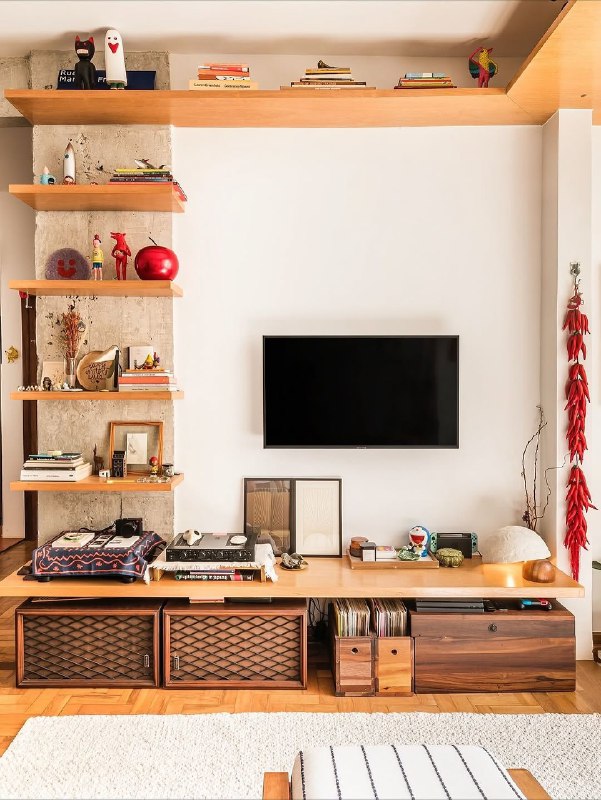
TVs are big, black, and not particularly decorative. When they’re off, they’re basically a giant dark void on your wall. The temptation is to just mount it and call it done, but that often leaves the wall feeling bare and unbalanced. The goal is making the TV feel like part of the overall design rather than the only thing you see.
You want to draw the eye around the entire wall, not just to the screen. Strategic decor creates balance and makes the TV area feel cohesive and intentional.
TV Stand or Console Styling
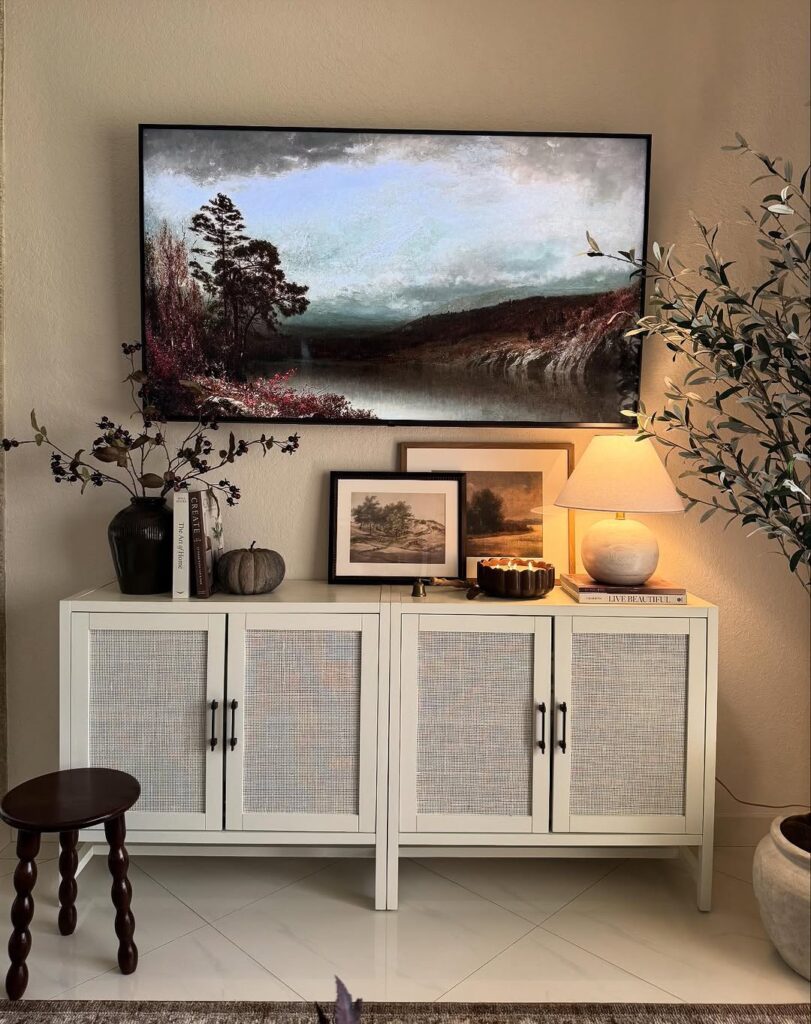
If your TV sits on a stand, styling the surface is your first opportunity to make it look good.
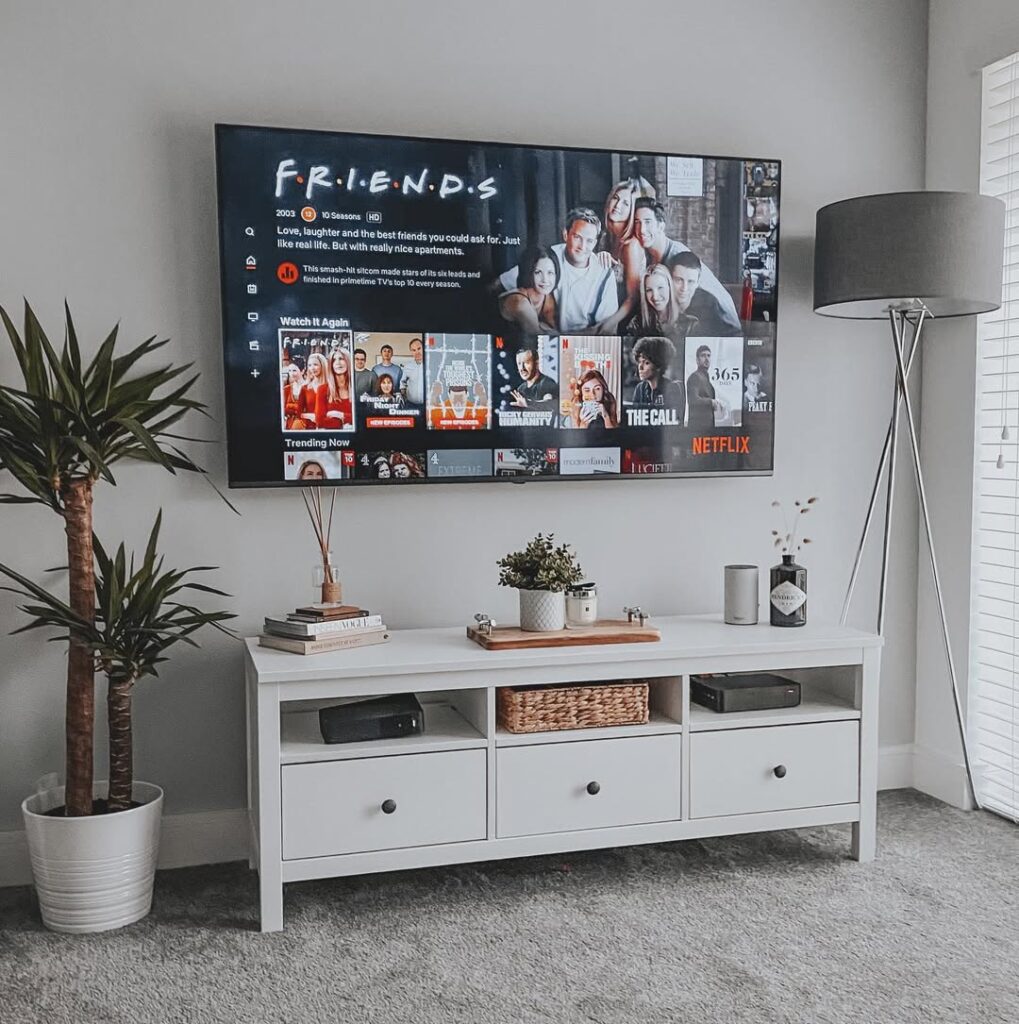
Keep it symmetrical or intentionally asymmetrical. Symmetry means matching elements on both sides of the TV—a plant on each side, matching lamps, coordinated stacks of books. Intentional asymmetry balances visual weight without matching—maybe a tall plant on one side and a shorter lamp with books on the other.
Add height variation so everything isn’t the same level as the TV. Tall items on one or both ends draw the eye up and down rather than just across. Use a tall plant, floor lamp, or stack of books with a decorative object on top.
Include a plant or two for life and color. Plants soften the harsh lines of electronics and add natural elements. A fiddle leaf fig or snake plant in a nice planter works beautifully. Even small succulents in pretty pots help.
Decorative boxes or baskets hide remotes, cords, and other unsightly necessities. A woven basket or pretty box keeps clutter contained while looking intentional.
Books stacked horizontally create height and add color. Stack 2-4 books and top them with a small object, candle, or plant.
Limit the clutter. The console shouldn’t be covered with stuff. Choose a few well-placed items rather than filling every inch. Less is definitely more here.
I have a tall snake plant on one side of my TV, a medium-sized plant on the other, a small stack of books, and a decorative box for remotes. That’s it. Simple but the TV no longer looks like it’s floating in a void.
Wall Decor Around Mounted TVs
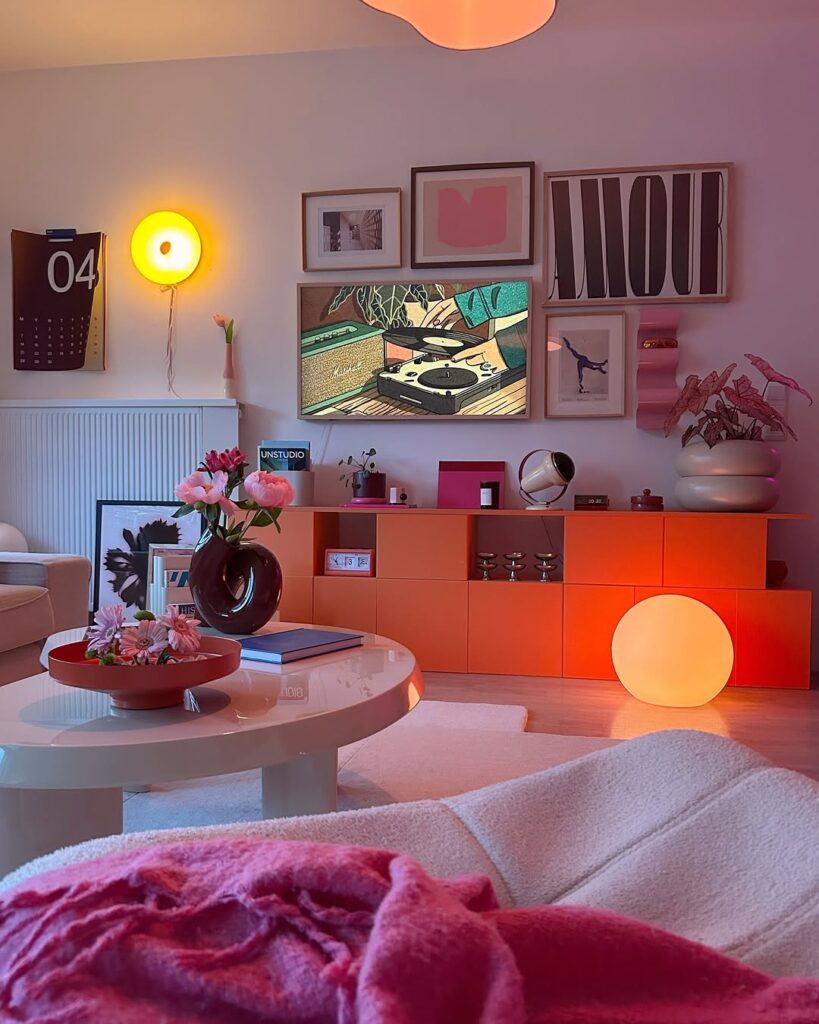
When your TV is wall-mounted, you have wall space to work with.
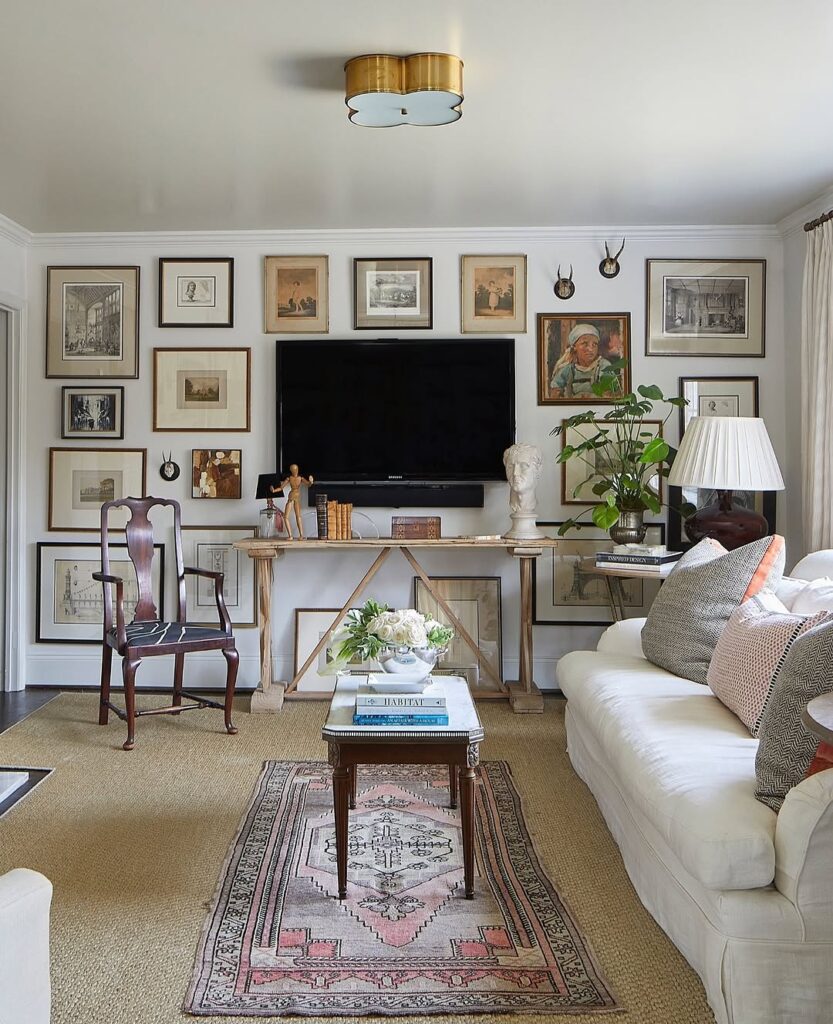
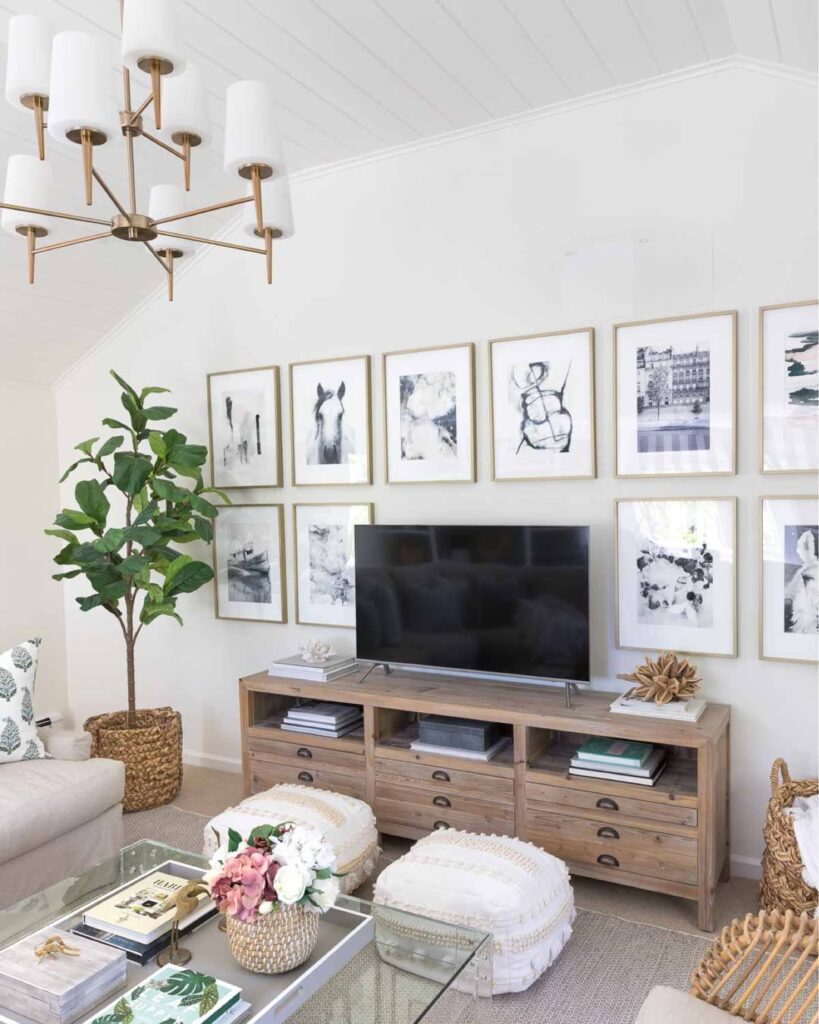
Gallery wall around the TV integrates it into a larger art display. This is the most popular approach and works really well. Frame the TV with art on all sides, treating the TV as one element in the overall composition. Use matching frames for cohesion or mix frame styles if that fits your aesthetic.
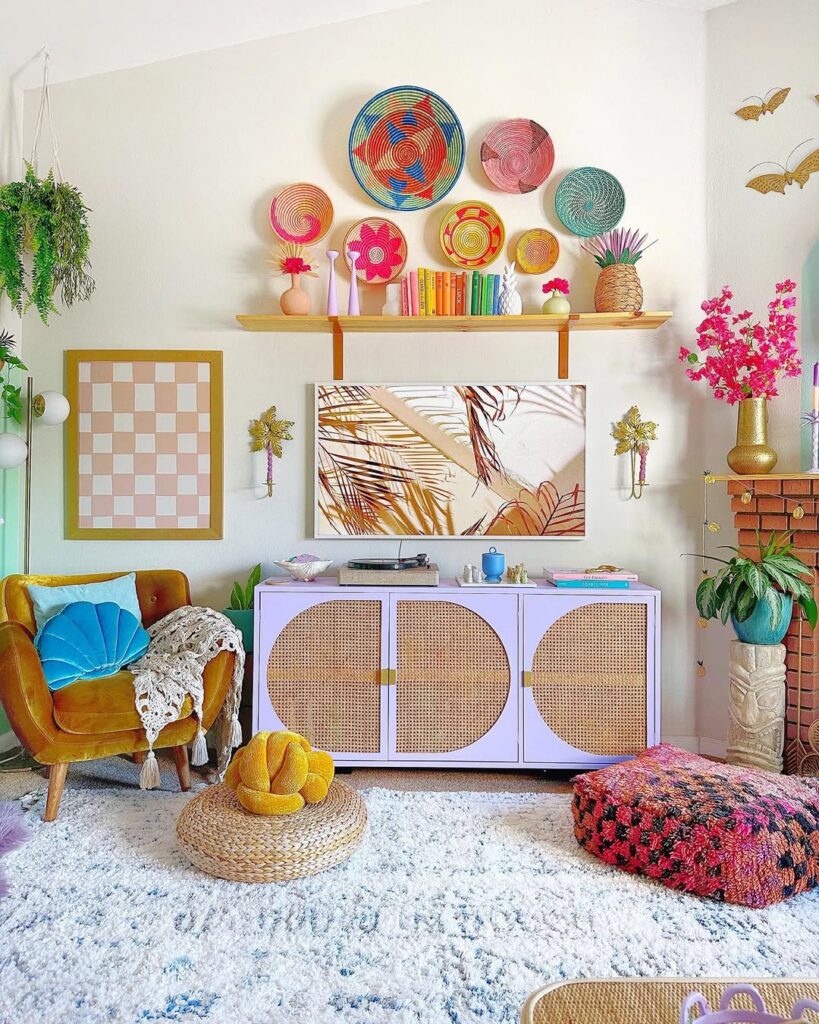
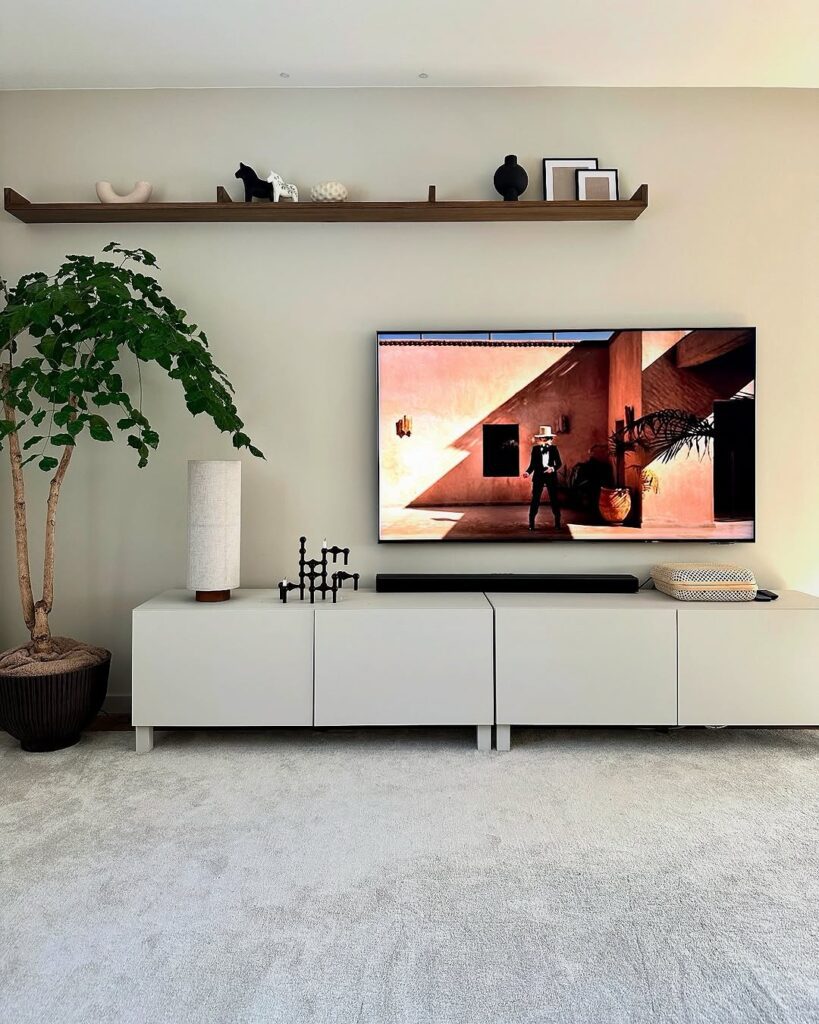
Floating shelves above and/or beside create display space without drilling tons of holes. Shelves above the TV hold plants, books, or decorative objects. Shelves on either side create a built-in look and provide functional storage.
Symmetrical art pieces on either side of the TV create balance. Two matching prints, two similar-sized pieces of art, or even two mirrors flanking the TV looks clean and intentional.
A large piece of art above if you have high ceilings and the TV is mounted lower. This draws the eye up and makes the TV feel less dominant. Make sure there’s enough space between them so it doesn’t look cramped.
Built-in shelving effect using floating shelves arranged around the TV to create a custom look without actual built-ins. Shelves above, beside, and sometimes below the TV create visual interest and storage.
The key with wall decor is balance. You don’t want one side heavier than the other, and you don’t want everything the same size creating a boring, flat look.
The Gallery Wall Approach
This deserves its own section because it’s so popular and effective.
Measure and plan first. Use paper templates on the wall to arrange your gallery before putting holes in the wall. Take a photo to reference during installation.
Keep consistent spacing between frames. About 2-3 inches between each frame looks balanced and intentional.
Vary frame sizes but keep them proportional to the TV. You don’t want tiny 4×6 frames next to a 65-inch TV—they’ll look ridiculous.
Maintain some consistency whether that’s all black frames, all similar matting, or sticking to a color palette in the art. Some unifying element keeps it from looking chaotic.
The TV should feel integrated not surrounded. You’re incorporating it into the design, not building a shrine around it.
I haven’t done a full gallery wall around mine yet, but I’ve seen it done really well. The TV just becomes one element in a larger, interesting wall rather than the only thing you see.
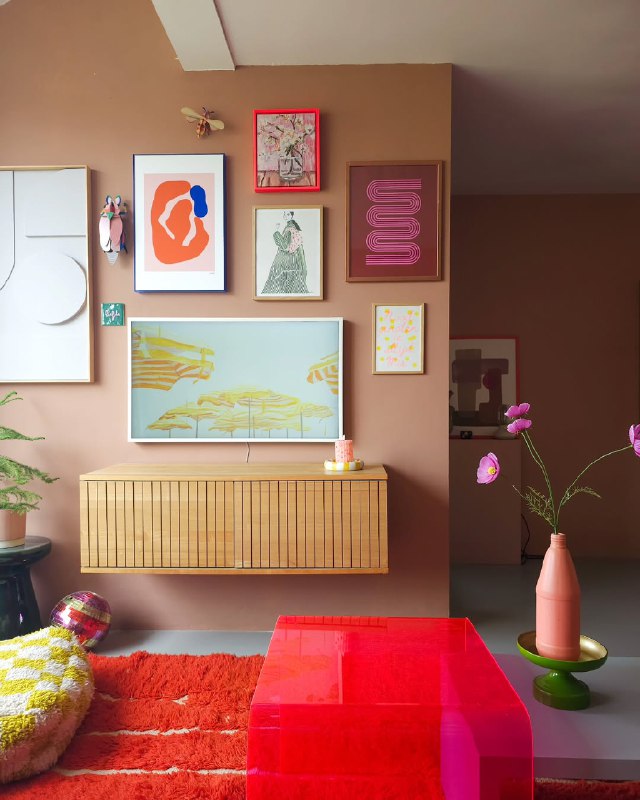
Styling TV Consoles and Media Units
The rule of thirds works here. Divide the console visually into thirds and place items accordingly. The TV often takes up the middle third, so style the outer thirds.
Closed storage hides cable boxes, gaming consoles, and media clutter. Cabinets with doors keep technology accessible but out of sight.
Open shelving on media units needs thoughtful styling. Use a mix of practical items (storage baskets) and decorative objects (plants, books, candles). Keep it balanced and not too cluttered.
Cable management is essential. Use cable clips, cord covers, or cable boxes to hide the mess of wires. Even the best styling looks bad with a tangle of cords visible.
Layer items on shelves for depth. Place larger items in back, medium in middle, small in front. This creates visual interest and prevents the flat look.
Above the TV
This is tricky territory. What goes above your TV depends on how high it’s mounted and your ceiling height.
If you have 12+ inches of space above the TV, you can add a floating shelf with small plants or objects, a piece of horizontal art, or subtle wall decor like a small clock or decorative letters.
If space is limited, keep the wall above the TV clear. A busy wall above a TV feels cramped and chaotic.
High ceilings give you more options. You can add artwork, shelving, or architectural details above the TV without it feeling crowded.
I have about 18 inches above my TV and I’m still deciding what to put there. Currently it’s just painted wall and honestly that might be the answer. Sometimes blank space is better than forcing decor.
Floor Decor Beside the TV
Don’t forget the floor space on either side of your TV setup.
Tall plants in floor planters fill vertical space and add life. A fiddle leaf fig, bird of paradise, or tall snake plant works beautifully.
Floor lamps provide lighting and fill empty corners. An arched floor lamp looks modern and stylish.
Baskets for storage hold throws, pillows, or media items while looking intentional.
Decorative ladder leaning against the wall beside the TV can hold plants, throws, or even be left empty as a sculptural element.
Tall vase with branches creates height and natural elements without taking up floor space.
What Not to Do
Don’t mount the TV too high. Eye level when seated is ideal. TVs mounted above fireplaces are usually too high and hurt your neck.
Don’t ignore scale. Tiny decor items around a massive TV look silly. Make sure your decor is proportional to the TV size.
Don’t overcrowd the space. Too much decor makes it look cluttered and chaotic rather than styled.
Don’t forget functionality. You still need to access your TV, reach remotes, and live in this space. Don’t sacrifice function for aesthetics.
Don’t let cords show. Visible cables ruin even the best styling. Deal with cord management first.
Different Styles
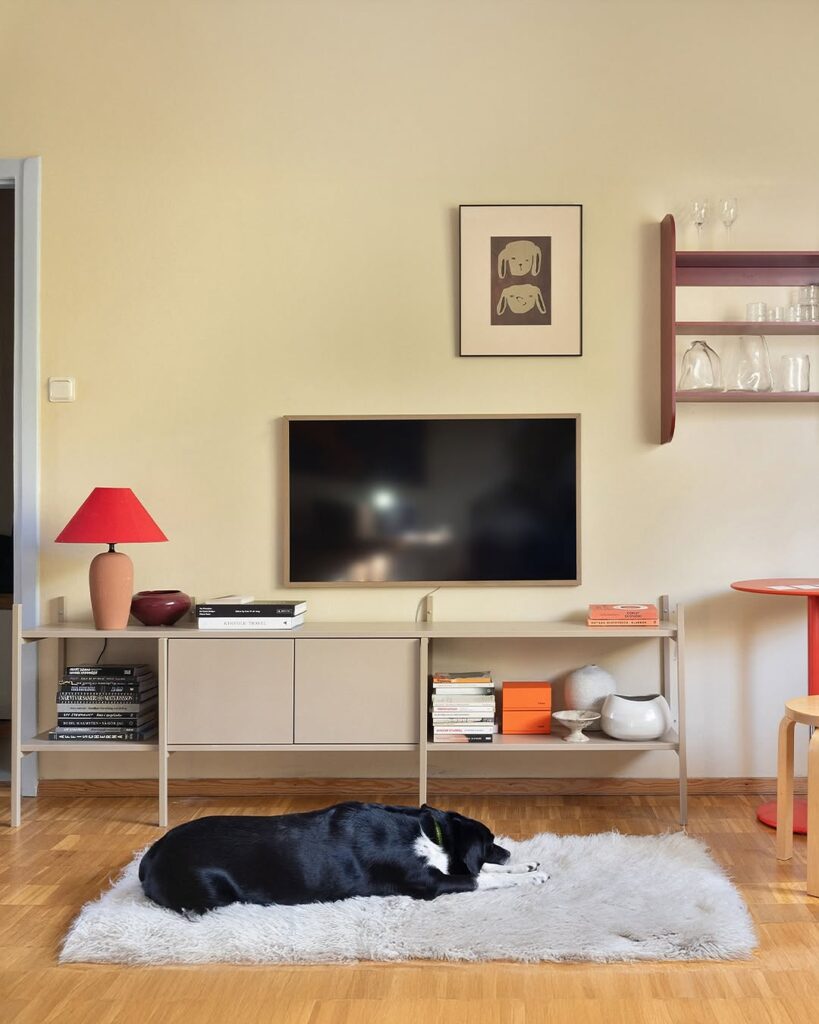
Modern minimal keeps it simple with clean lines, maybe one or two plants, minimal art, and lots of negative space.
Cozy traditional adds warmth with wooden furniture, family photos in frames, books, and classic decor elements.
Bohemian eclectic layers plants, textiles, collected objects, and mixed art styles for a rich, lived-in look.
Scandinavian light features white or light wood furniture, minimal decor, functional beauty, and lots of open space.
Industrial edge exposes metal shelving, keeps colors neutral, and emphasizes function with minimal decoration.
Pick what fits your overall living room aesthetic so the TV area doesn’t feel disconnected.
Starting Your TV Area Styling
Assess your current situation. What’s working? What feels off? Start there.
Add plants first if you have nothing. Even one or two plants make an immediate difference.
Deal with cords before adding decor. Use cable management solutions so wires aren’t ruining your styling.
Start with console styling if your TV sits on furniture. Get that right before tackling walls.
Add wall elements slowly. You don’t need to create a full gallery wall in one day. Add pieces over time as you find things you love.
Remember it should feel balanced not matchy-matchy. The TV area should feel like part of the room, not a separate shrine to television.
You don’t need to spend a fortune or do anything dramatic. Even small thoughtful additions make your TV area look intentional rather than like you just plunked a screen on the wall and called it done.
The TV is there whether you like it or not. Might as well make the whole situation look good.