You know that thing where you need one pot and have to remove six others to get to it, and then they all crash down in a chaotic clatter that makes you question your life choices? Yeah, I lived that way for years.
Then I finally figured out proper pot and pan storage, and cooking became so much less frustrating. No more avalanches, no more digging, no more mysterious clanging sounds at 6am. Just organized cookware that’s actually accessible when you need it.
Let me show you some storage solutions that actually work in real kitchens.
Why Pot Storage Matters
Beyond the obvious annoyance factor, bad storage damages your cookware. Stacking pots carelessly scratches non-stick surfaces and dents edges. Lids that don’t have designated spots get warped or lost. Plus, when things are hard to access, you end up using the same two pots over and over because you can’t be bothered to dig for the others.
Good storage protects your investment, makes cooking more efficient, and honestly just makes your kitchen feel more functional. It’s one of those changes that improves your daily life more than you’d expect.
The Stacking Problem
If you’re stacking pots directly on top of each other, you need protection between them. Pot protectors or even felt pads prevent scratching, especially important for non-stick and stainless steel. Stack from largest on bottom to smallest on top for stability. Store lids separately rather than on the pots to save vertical space.
Honestly though, stacking is the least efficient storage method. It works if you have no other options, but there are better ways.
Cabinet Organization Solutions
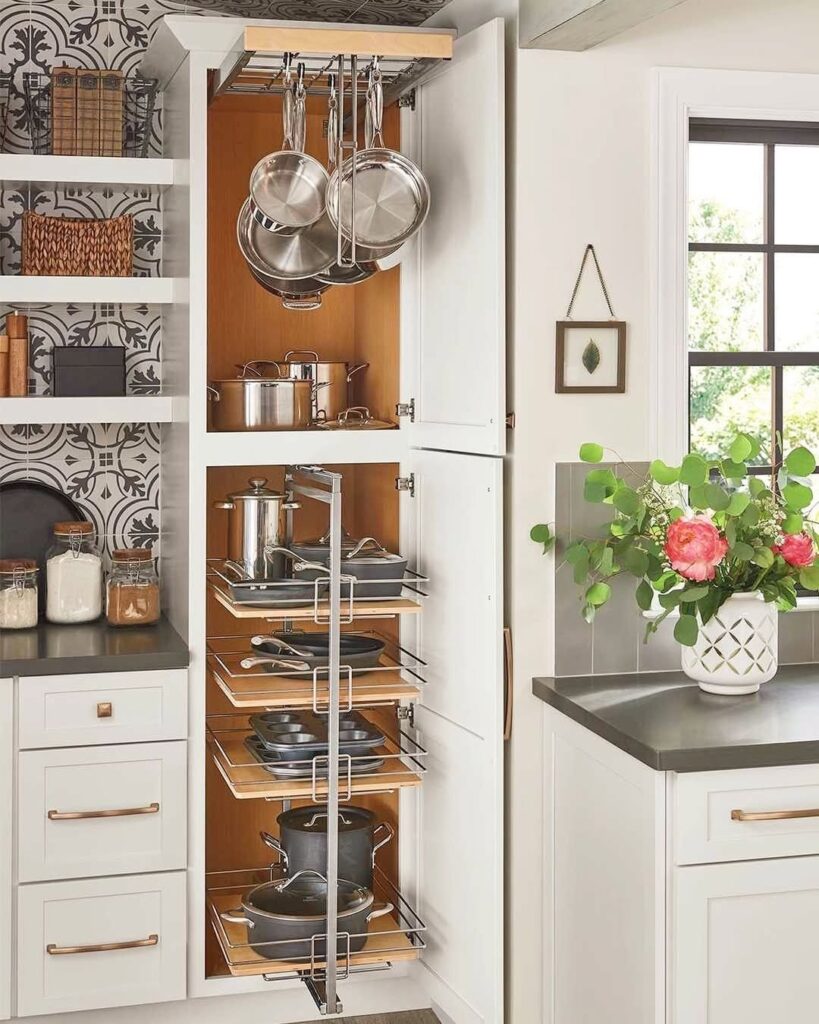
Pull-out drawers or shelves transform lower cabinets. Instead of reaching into a dark cave and moving everything around, you pull out the drawer and see all your pots at once. You can retrofit existing cabinets with pull-out organizers relatively easily. This was my game-changer. I installed pull-out shelves in my lower cabinet and can now access every pot without moving others.
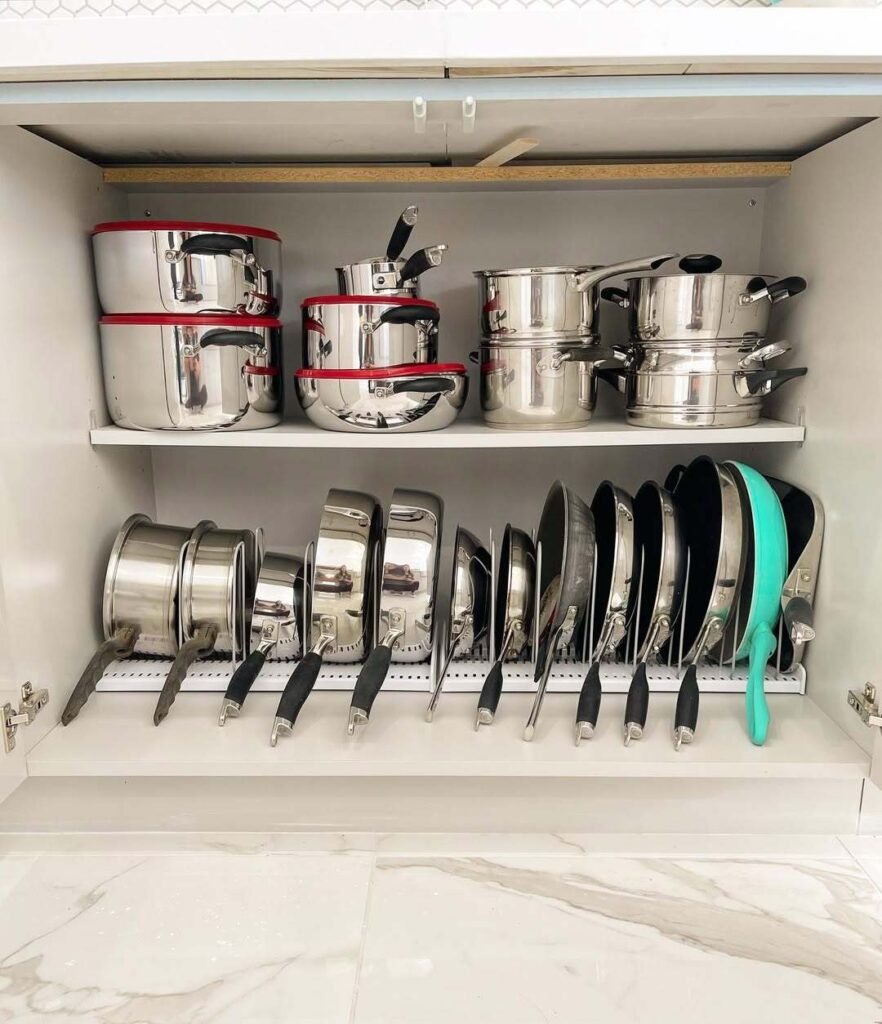
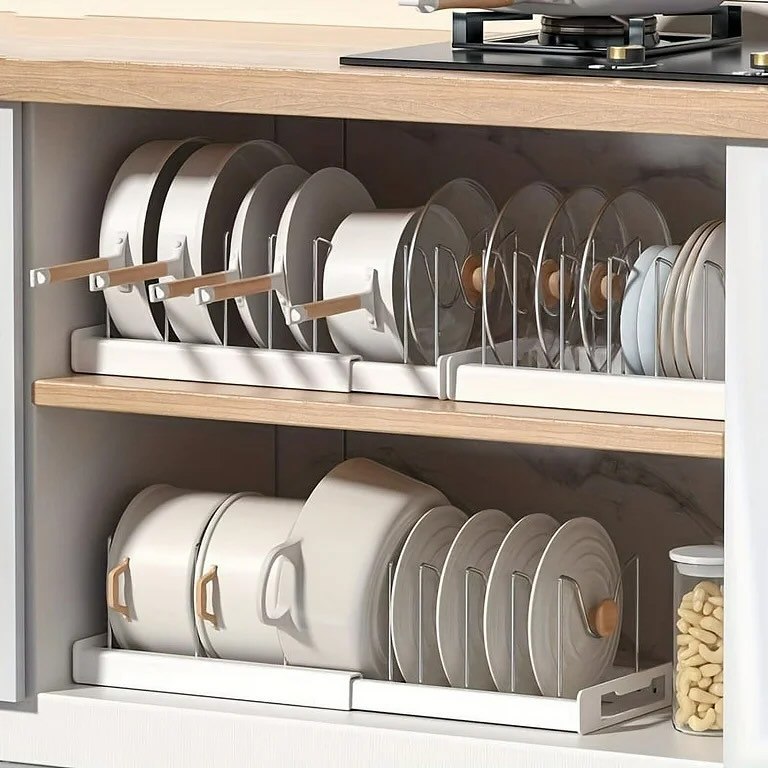
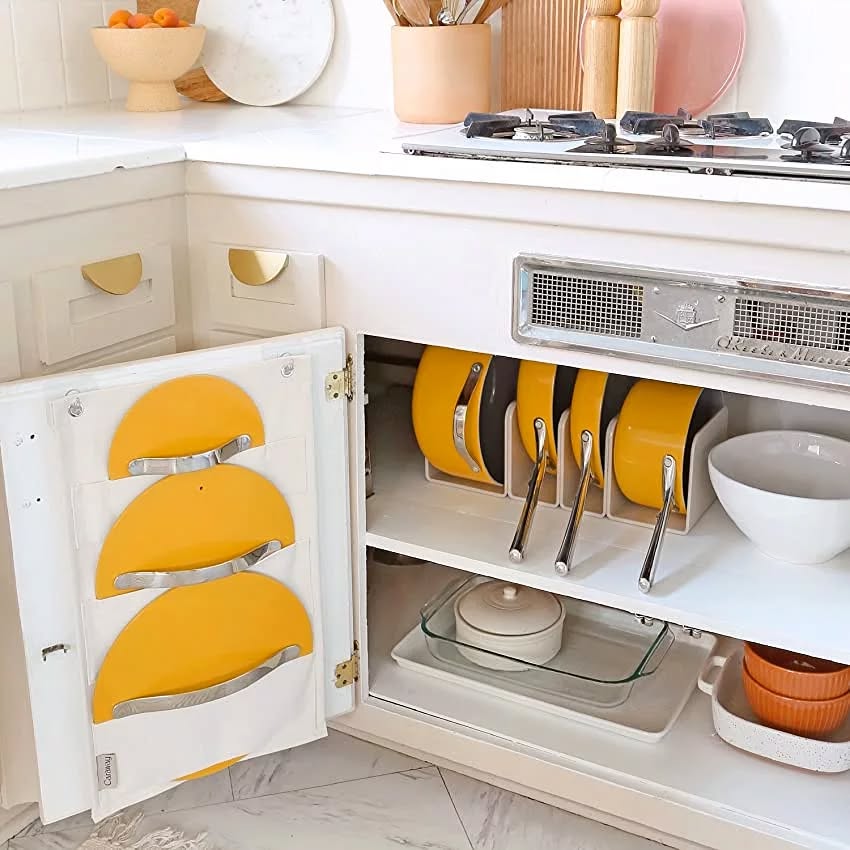
Vertical dividers store pots and pans on their sides like files. Pan organizer racks create slots that hold each pan vertically so you can grab the one you need without unstacking. These work in cabinets or deep drawers. Use adjustable dividers so you can customize spacing for your specific cookware.
Two-tier organizers create additional levels in tall cabinets. The expandable shelves give you a top and bottom tier, effectively doubling your storage space. Store smaller items on top, larger ones underneath.
Door-mounted racks use the inside of cabinet doors for lids or smaller pans. Adhesive or screw-mount organizers hold lids vertically on the door, freeing up interior cabinet space. This is perfect for keeping lids corralled and visible.

Drawer Solutions
If you have deep drawers, they’re ideal for pots and pans.
Pegboard systems in drawers let you customize exactly where each pot sits. Insert pegs to create barriers that keep pots separated and prevent sliding. You can rearrange the configuration whenever you add new cookware. These come as drawer insert kits specifically for pots and pans.
Drawer dividers create designated spaces for each pot or pan. Adjustable bamboo or expandable dividers work well. Store pans flat and nested if they’re the same size, or use dividers to keep different sizes separated.
Store pots upside down in drawers to stack them more efficiently and protect the cooking surface. Lids can go in a separate shallow drawer or use a drawer divider to dedicate part of the drawer to lids.
I don’t have deep drawers, but my friend does and she uses the pegboard system. Watching her pull out that drawer and grab exactly what she needs without moving anything else made me genuinely jealous.

Hanging Storage
Going vertical saves cabinet space and looks pretty impressive.
Pot racks overhead hang from the ceiling above your island or counter. They hold multiple pots and pans on hooks, keeping everything visible and accessible. This works best if you have high ceilings and don’t mind the industrial or professional kitchen look. Make sure it’s securely installed—pots and pans are heavy.
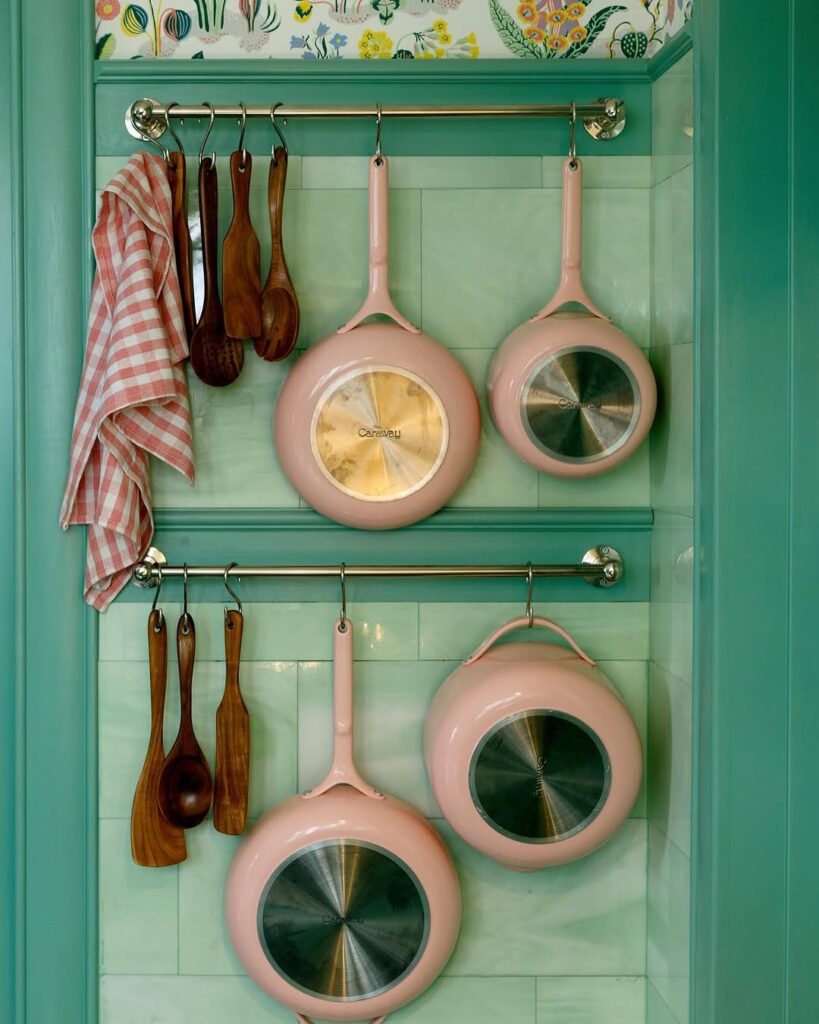
Wall-mounted racks or rails use wall space near your stove or prep area. Install a rail system with S-hooks, or use a wall-mounted pot rack. Everything stays within reach while cooking. This is especially good in small kitchens where cabinet space is limited.
Pegboard walls create customizable hanging storage. Paint a pegboard in a color that matches your kitchen, add hooks, and hang pots, pans, and utensils. You can rearrange hooks whenever you need to. This also becomes kitchen decor if your pots are attractive.
Corner racks use that awkward corner space near the stove. Standing pot racks fit in corners and hold multiple pans vertically.
The visual impact of hanging storage is a personal preference thing. Some people love the professional chef aesthetic, others think it looks cluttered. I lean toward putting things away, but I’ve seen gorgeous kitchens with hanging pot storage.

Lid Storage Strategies
Lids are the worst part of pot storage because they’re awkwardly shaped and never seem to fit anywhere.
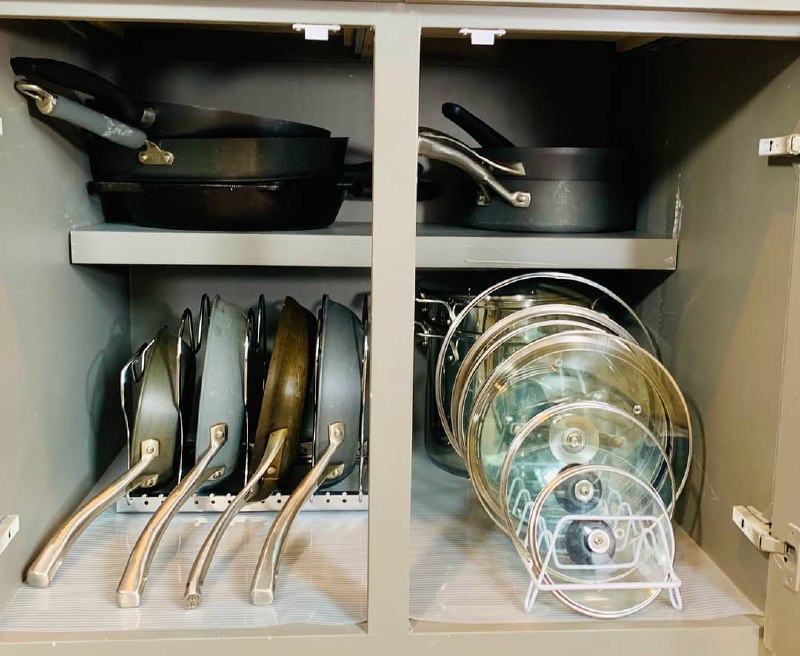
Vertical lid organizers store lids on their edge in a rack. These work in cabinets or drawers and let you flip through lids like files to find the right one. Much better than stacking them.
Tension rods installed vertically in a cabinet create slots where you can slide lids in edgewise. Cheap, easy to install, and surprisingly effective.
Door-mounted lid racks utilize that unused cabinet door space. Wire racks or adhesive organizers hold lids flat against the door.
Magazine files or office file organizers work surprisingly well for storing lids vertically in cabinets. Bonus: they’re cheap.
Drawer with dividers dedicated just to lids keeps them organized and visible. This requires having a drawer to spare, but it’s the most organized solution.
I use a combination of a vertical rack in my cabinet for most lids and a door-mounted organizer for the smaller ones. Both were under $20 and solved my lid chaos completely.
Small Kitchen Solutions
When space is at a premium, you have to get creative.
Use every bit of vertical space with stackable organizers, over-the-door storage, and wall-mounted options. Store items you use less frequently up high, everyday pots at easy-access height.
Hang what you can to free up cabinet space for other items. Even one or two hanging pots makes a difference.
Store pots in the oven if you have an unused oven or one you use infrequently. This isn’t ideal but works for rarely used cookware. Just remember to remove them before preheating.
Under-sink storage can work for a few pots if you use pull-out organizers and keep the area well-organized. Not perfect but functional in desperate situations.
Multi-purpose cookware reduces the number of pots you need. A good Dutch oven can replace multiple pots. A large skillet with a lid does the work of several pans. Minimizing your collection makes storage easier.
What to Keep and What to Ditch
Before organizing, evaluate what you actually use. That tiny saucepan you haven’t touched in two years? The pan with the scratched non-stick? The duplicate sizes? Be honest about what you need.
Keep your most-used items in the most accessible spots. Daily cookware should be at waist height and easy to grab. Specialty items can go higher or lower. Duplicates or damaged pieces should probably be donated or tossed.
I got rid of three pans I never used and suddenly had room to organize what I actually cook with. Sometimes the storage problem is actually a “too much stuff” problem.
My Storage Setup
I have pull-out shelves in my lower cabinet with vertical dividers storing pans on their sides. My everyday pots nest inside each other on one shelf with pot protectors between them. Lids are in a vertical organizer in the same cabinet and a door-mounted rack for small lids. My cast iron pans hang on a wall-mounted rail near the stove because I use them constantly.
It’s not Pinterest-perfect but it’s functional. I can access any pot or pan in about two seconds without moving anything else. That’s the goal.

Installation Tips
Measure first before buying anything. Measure your cabinet depth, width, and height. Measure your largest pots and pans. Many organizers don’t fit standard cabinets without modifications.
Consider weight because pots and pans are heavy. Make sure whatever system you install can handle the weight. Wall-mounted racks need to be anchored into studs, not just drywall.
Start simple with one solution before overhauling everything. Try a lid organizer first, see how it works, then tackle the pots themselves.
Read reviews specifically mentioning the storage issues you’re trying to solve. Other people’s experiences will tell you what actually works.
Maintenance
Once you’ve got a system, maintain it. Put things back in their designated spots rather than just shoving them wherever they fit. Periodically reassess if your system is still working as your cookware collection changes. Wipe down organizers and dividers when you clean your kitchen to prevent dust and grease buildup.
The organization only works if you maintain it, but once the system is in place, maintenance takes seconds. Way easier than the old dig-and-stack chaos.
The Bottom Line
Proper pot and pan storage isn’t about having the prettiest kitchen. It’s about making cooking less frustrating and protecting your cookware. Whether you go with pull-out shelves, vertical dividers, hanging storage, or a combination, the goal is the same: easy access to what you need when you need it.
You don’t need to spend a fortune or have a huge kitchen. You just need a system that works for your space and your cookware collection. Start with the biggest pain point—maybe it’s lids, maybe it’s accessing lower cabinets, maybe it’s your most-used pans—and solve that first.
No more avalanches, no more clattering at dawn, no more frustration. Just organized cookware that makes cooking actually enjoyable. Your future self will thank you every single time you cook.