I’m a tea person living in a coffee-obsessed world, and I got tired of digging through my cabinet every morning trying to find the right tea bag while everything else tumbled out. So I created a dedicated tea station and it’s genuinely changed my mornings.
Having a designated, organized spot for all your tea supplies makes the ritual of making tea feel more intentional and enjoyable. Plus, when everything looks pretty and accessible, you’re way more likely to actually use it instead of defaulting to whatever’s easiest.
Let me show you how to create a tea station that works for your space and makes every cup feel a little more special.
Why a Tea Station Works
It consolidates everything you need in one spot. No more hunting for honey, searching for your favorite mug, or realizing the kettle is in a completely different room. When everything’s together, making tea becomes effortless.
It also elevates the experience. Tea drinking is supposed to be a calming ritual, and having a beautiful, organized station honors that. Even if you’re just grabbing a quick cup before work, doing it at a dedicated tea station feels more mindful than rummaging through cluttered cabinets.
Finding Your Space
You don’t need a lot of room. A tea station can work almost anywhere.
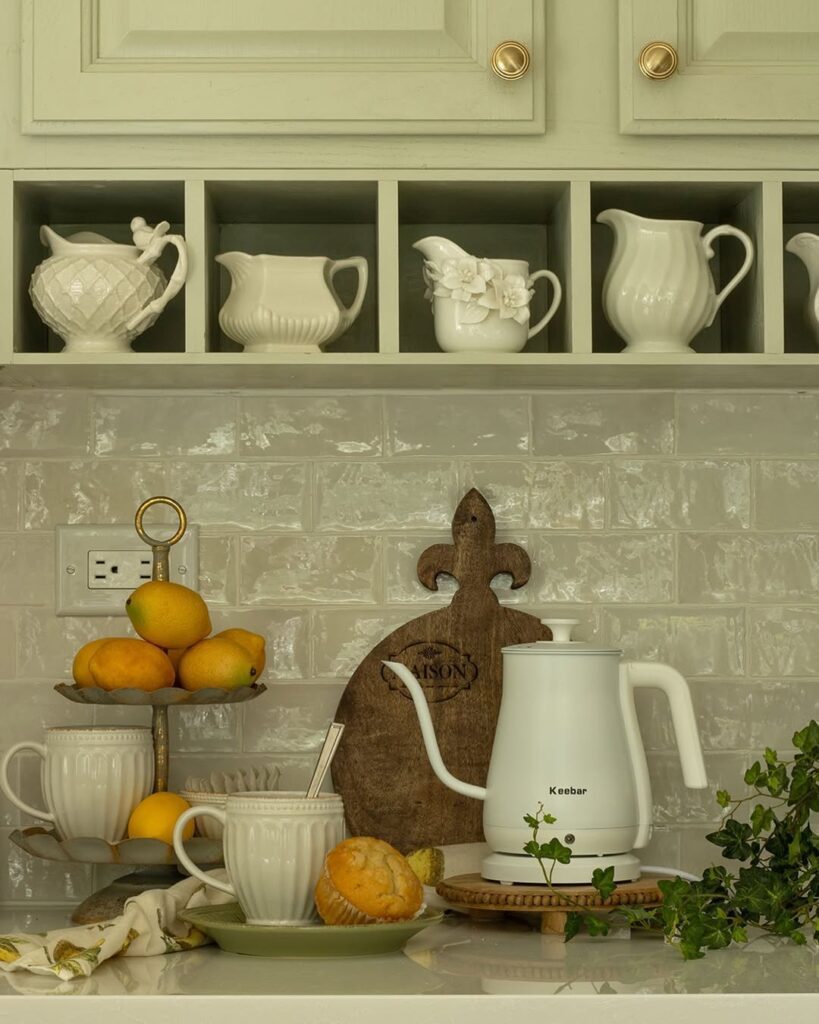
Kitchen counter corner is the most obvious spot if you have the space. Even a small section of counter near your kettle can work. This is ideal because you’re already in the kitchen where you have water access and can easily clean up.
A bar cart creates a mobile tea station you can tuck in a corner or roll wherever you need it. This is my setup and I love it. The two tiers give you storage, it looks intentional, and you can move it if needed. Plus, bar carts are inherently aesthetic.
A small side table or plant stand in your kitchen or dining area works if counter space is limited. You can store your kettle on the bottom and supplies on top. Keep mugs on a nearby hook or shelf.
Inside a cabinet works for a hidden station. Install small shelves or use a lazy Susan to organize everything inside a cabinet door. When you open it, everything’s right there but it stays tucked away when not in use.
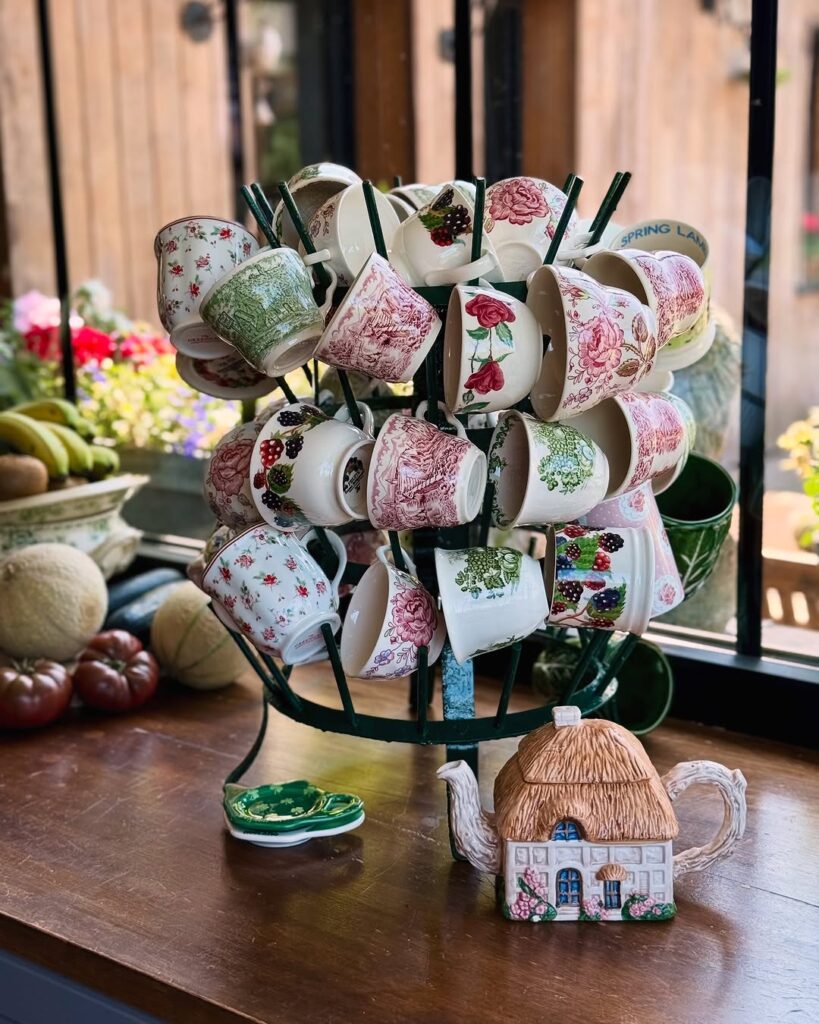
A bookshelf section dedicates one or two shelves to tea supplies. Style it nicely and it becomes part of your decor rather than hidden away. I’ve seen this done really beautifully with vintage teacups and pretty canisters.
Essential Elements
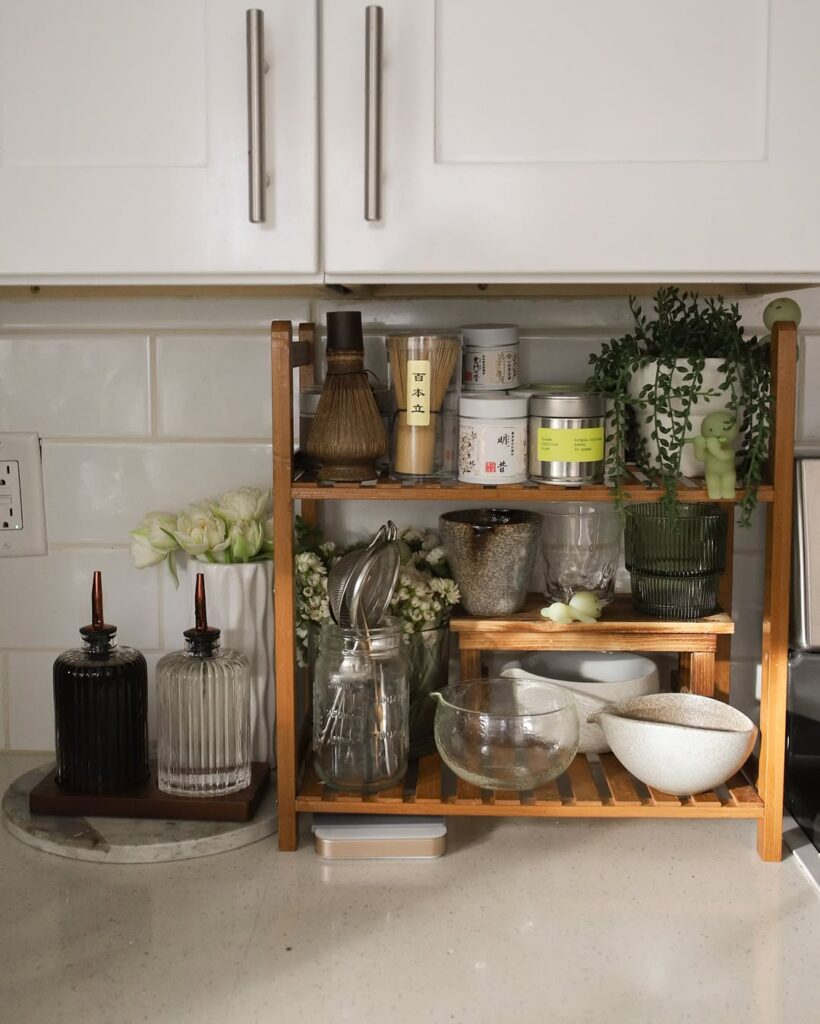
Tea storage is obviously crucial. How you store your tea depends on what kind you drink. For bagged tea, use a tiered organizer, small baskets, or a divided box where you can see all your options at a glance. For loose leaf tea, use airtight tins or glass jars with labels. I use a bamboo tea box with individual compartments for bags and several small glass jars for loose leaf.
Kettle or water access should be part of your setup. An electric kettle that lives on your tea station is ideal. If you don’t have counter space for that, at least have your kettle stored nearby and just bring it over when you need it.
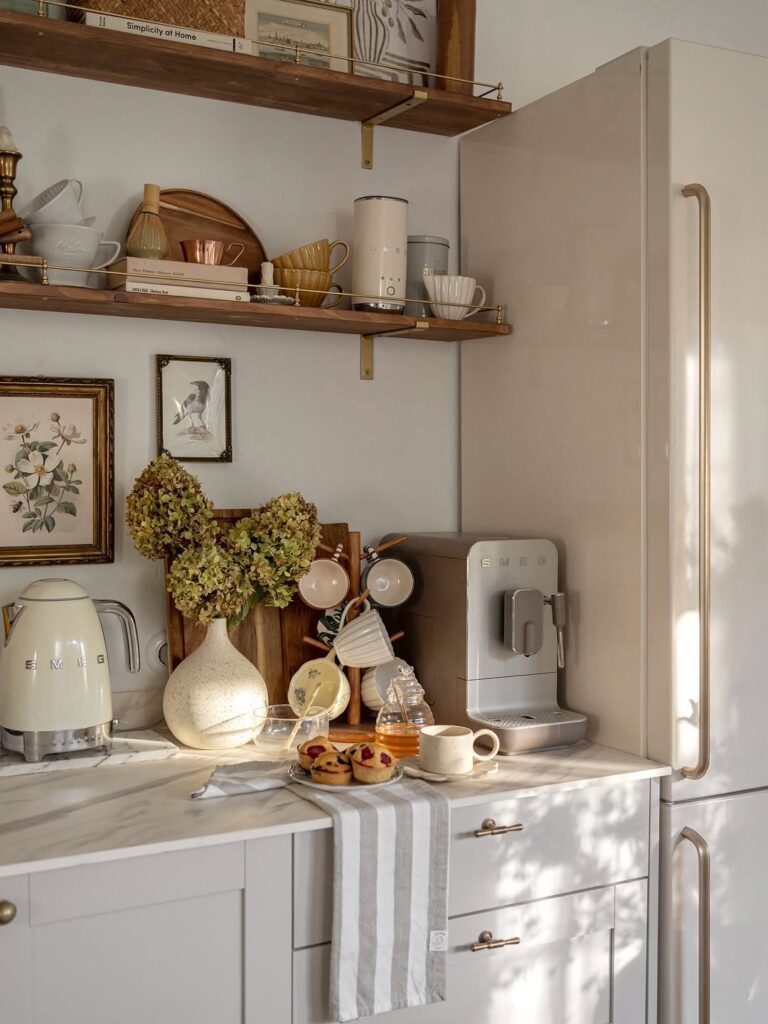
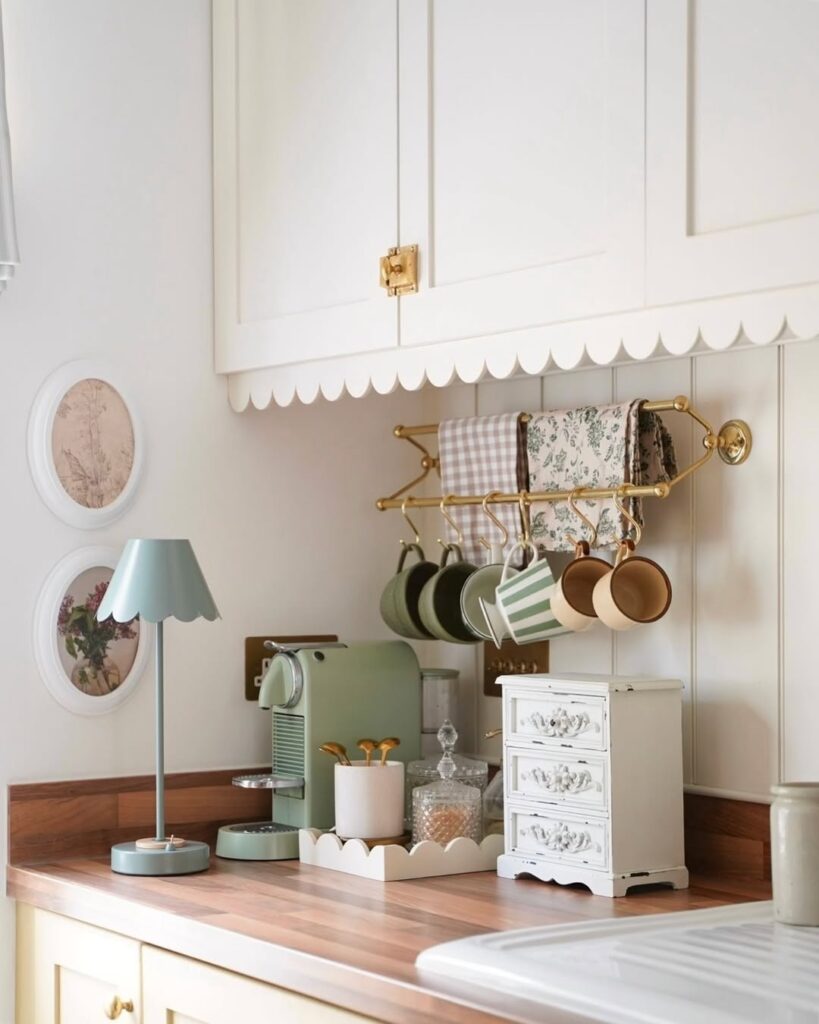
Mugs and teacups displayed rather than hidden make choosing your vessel part of the ritual. Hang mugs on hooks mounted on the wall or under a shelf. Display teacups on a small plate rack or tiered stand. Stack your everyday mugs on the station if you have room. I have four hooks under my cart’s top shelf where my favorite mugs hang.
Sweeteners and additions need their own spot. Small glass jars or canisters for sugar, honey, and any other sweeteners you use. A honey dipper if you use honey. Small containers for lemon slices if you keep them on hand. Everything should be in attractive containers rather than commercial packaging.
Accessories complete the station. A small tray or dish for used tea bags or spoons. A timer if you’re particular about steeping times. A tea infuser if you use loose leaf. Pretty spoons dedicated to your tea station. Small tongs for grabbing tea bags. A compost bowl for used tea leaves if you’re eco-conscious.
Styling Your Tea Station
Functionality is important, but so is aesthetics. You want this to look intentional and beautiful.
Use trays and containers to corral items and create visual organization. A marble tray holds your kettle and current mug. A wooden tray organizes sweeteners and spoons. Small ceramic containers hold tea bags. Everything has a designated spot but looks curated rather than cluttered.
Add natural elements like a small plant, fresh flowers in a bud vase, or a sprig of eucalyptus in a jar. This brings life to your station and makes it feel more like a destination than just storage.
Incorporate personal touches that make it yours. A small framed quote about tea. A vintage spoon from your grandmother. A handmade ceramic mug from a local artist. Personal elements make your station special rather than generic.
Consider height variation to create visual interest. Stack books under your kettle or teapot. Use a small cake stand to display teacups. Mount hooks at different heights for mugs. The variation keeps it from looking flat and boring.
Keep your color palette cohesive. Whether that’s all white and wood tones, colorful and eclectic, or soft pastels, having some visual consistency makes it look intentional. My cart has mostly white and natural wood with pops of green from plants and tea tins.
Organization Systems
The drawer organizer method works if your station has drawers. Use small drawer dividers to separate different tea types, keep sweeteners organized, and corral small accessories. Label sections if helpful. Everything stays tidy and accessible.
Vertical storage maximizes small spaces. Mount a small shelf above your station for tea storage. Use wall-mounted baskets for tea boxes. Hang a small rack for mugs. Going vertical keeps your counter clear while giving you plenty of storage.
The rotating system uses a lazy Susan or turntable for tea bags. You can see all your options at once and just spin to grab what you want. This works especially well for people with lots of tea varieties.
Designated zones keep like items together. One area for tea storage, one for sweeteners, one for mugs, one for accessories. Even on a small station, creating little zones makes everything easier to find and maintains visual order.
Tea Station Themes and Styles
Minimalist modern keeps it clean with white or natural containers, simple lines, and only essentials visible. A white electric kettle, glass jars for tea, and simple ceramic mugs create a peaceful, uncluttered look.
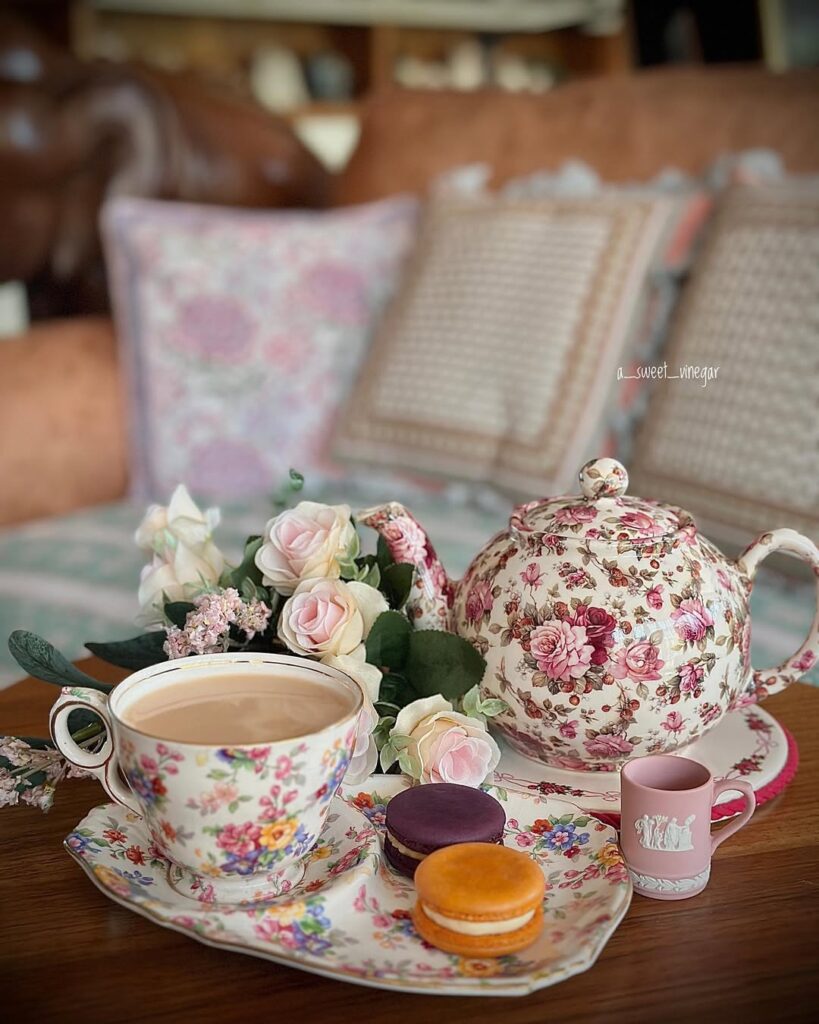
Vintage charm incorporates floral teacups, vintage tins, an old-fashioned kettle, and antique spoons. Display vintage tea advertisements or old recipe cards. It feels nostalgic and cozy.
Boho eclectic mixes colorful teacups, woven baskets, plants, crystals, and mismatched containers. Natural materials like wood and clay combine with vibrant colors for a collected, worldly vibe.
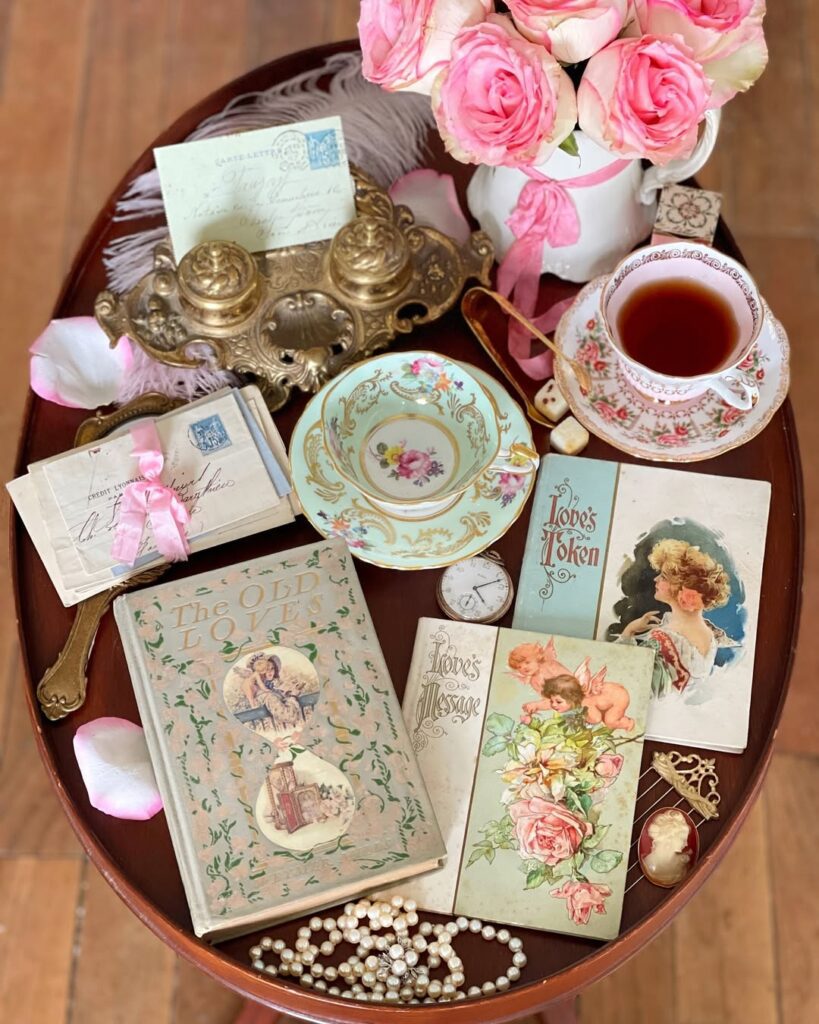
Cottagecore dream features delicate florals, soft colors, vintage-inspired pieces, and lots of botanical touches. Think pink roses in a vase, floral teacups, wooden honey dippers, and handwritten labels on jars.
Japanese-inspired emphasizes simplicity and ritual with a simple tea set, minimal accessories, natural materials, and a small zen garden or bonsai nearby. The focus is on mindfulness and clean aesthetics.
Budget-Friendly Setup
You don’t need expensive pieces to create a beautiful tea station.
Thrift stores have tons of teacups, mugs, vintage tins, and small trays perfect for tea stations. I’ve found some of my favorite pieces for under $5 each.
Dollar stores stock glass jars, small baskets, hooks, and organizational items. They’re perfect for tea storage and organization without the markup.
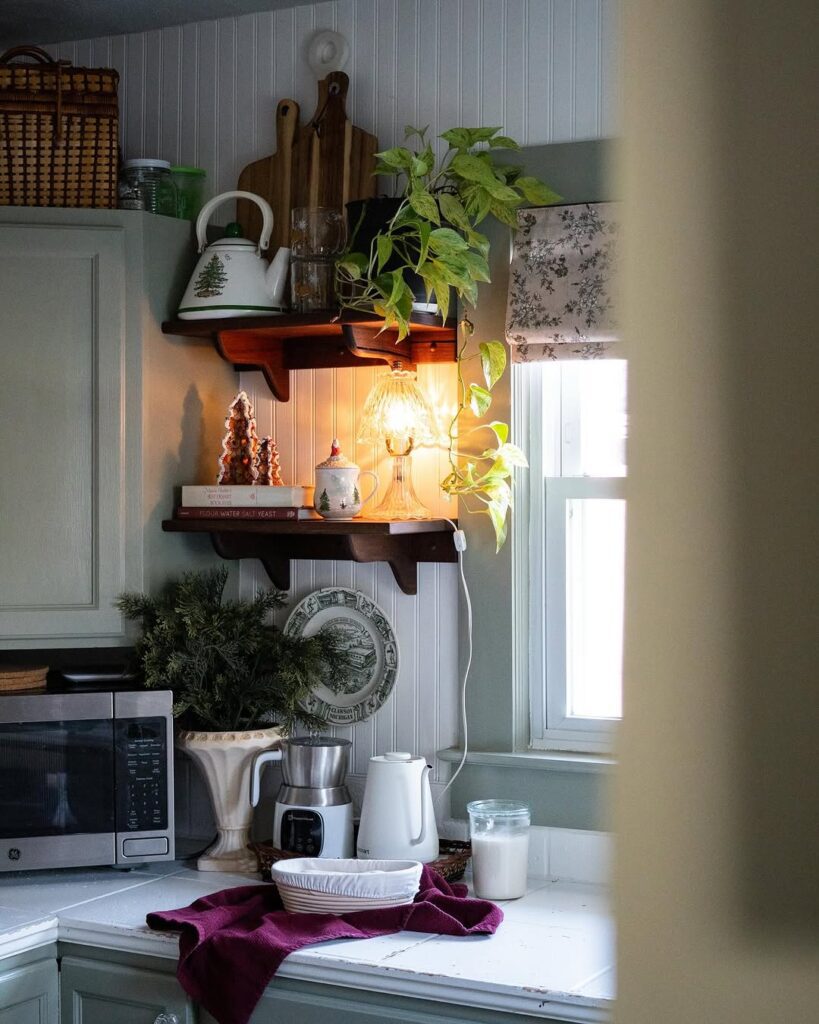
Use what you have before buying new. That pretty dish can hold tea bags. Old mason jars work perfectly for loose leaf storage. Repurpose a shelf or corner of counter space you’re not using effectively.
DIY labels using chalkboard labels, printable stickers, or just a marker and masking tape make everything look more organized and intentional at minimal cost.
Start small with just the essentials and add pieces over time as you find things you love. My station evolved over several months as I figured out what I actually needed versus what just looked pretty.
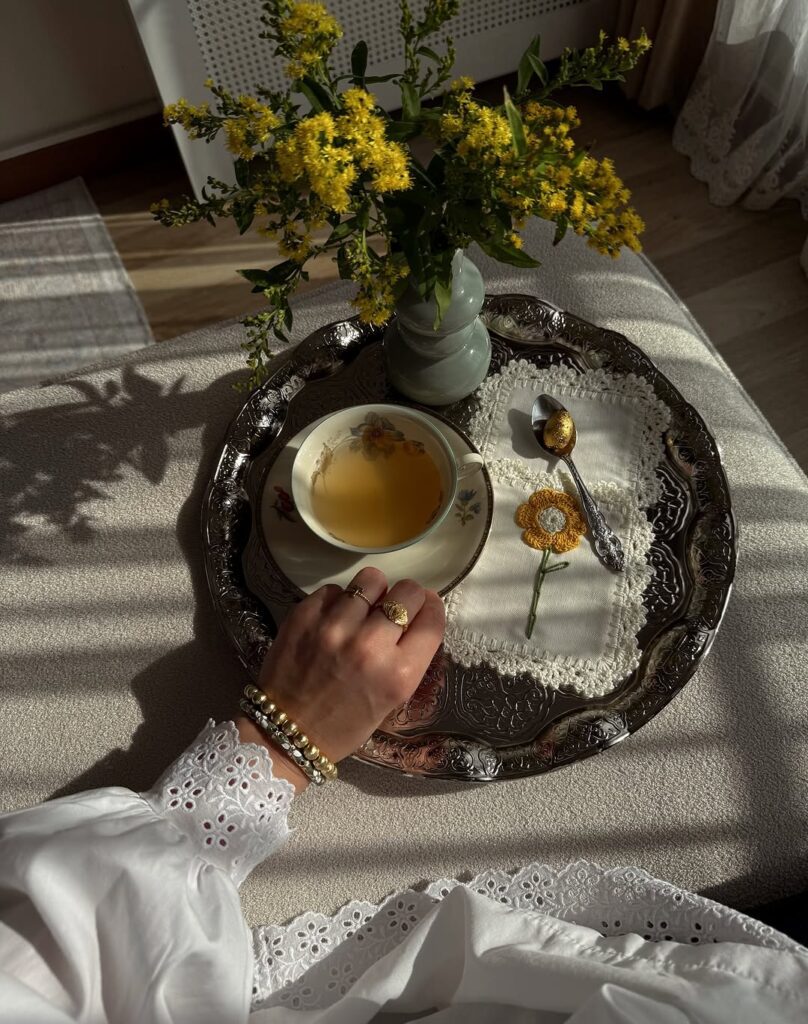
My Tea Station Reality
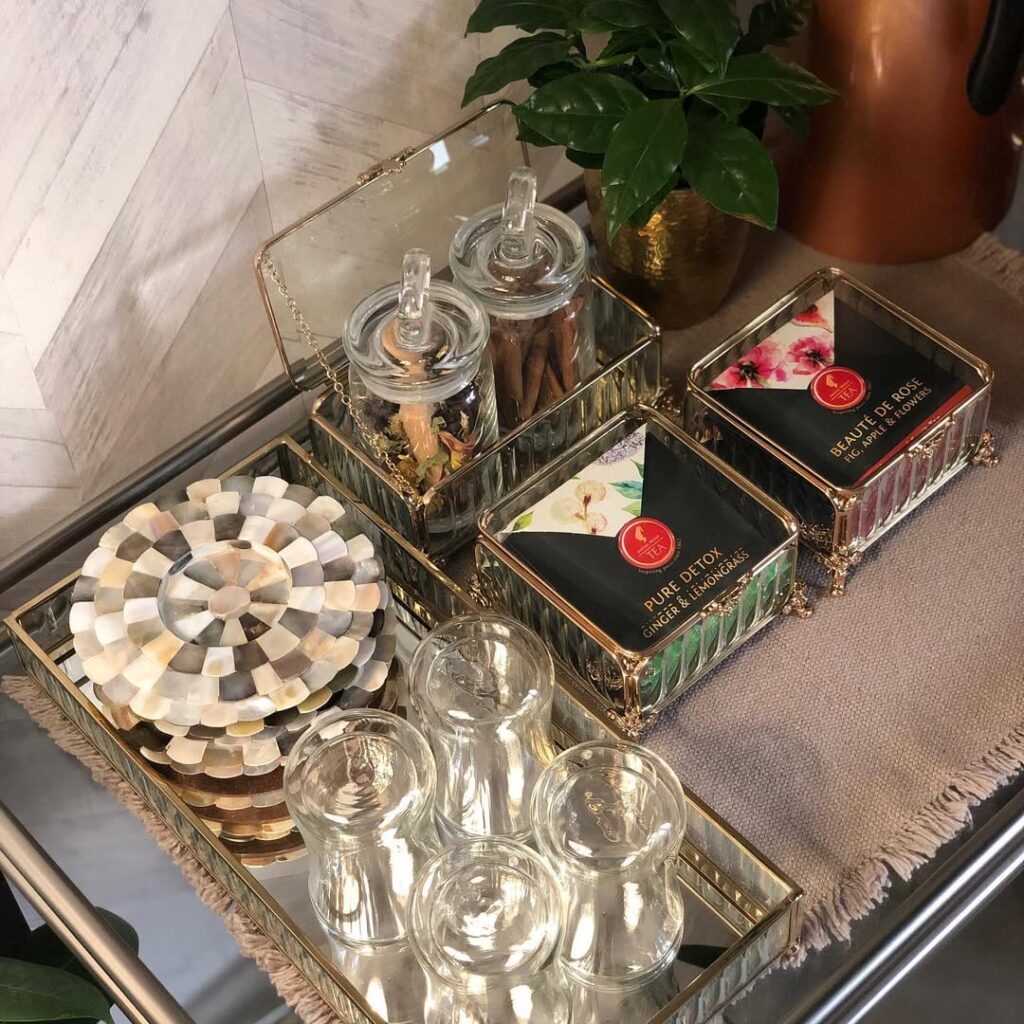
I use a two-tier gold bar cart in my kitchen corner. Top tier holds my electric kettle, a small vase with flowers, and my current rotation of mugs hanging from hooks underneath. Bottom tier has my bamboo tea organizer, a small tray with honey and sugar in glass jars, a dish for spoons, and a small plant.
It takes up maybe two square feet of floor space but completely changed how I interact with tea. I actually drink tea daily now instead of occasionally because it’s so easy and pleasant to make. The ritual of walking to my tea cart, selecting a tea, and making my cup has become a favorite part of my morning.
Is it perfect? No. Do I sometimes leave a used mug sitting there? Yes. But even imperfect, it functions beautifully and makes me happy every time I use it.
Making It Actually Work
Keep it stocked so you never run out of your favorites. There’s nothing worse than going to make tea and realizing you’re out.
Refresh weekly by wiping down surfaces, restocking supplies, and removing any clutter that’s accumulated. Five minutes of maintenance keeps it functional and pretty.
Rotate seasonally with different tea selections, decorations, or even mug choices. My summer station looks lighter and brighter while winter feels cozier and warmer.
Use it daily because a tea station that doesn’t get used is just clutter. If you find yourself not using it, reassess. Maybe it’s in the wrong spot or missing something essential.
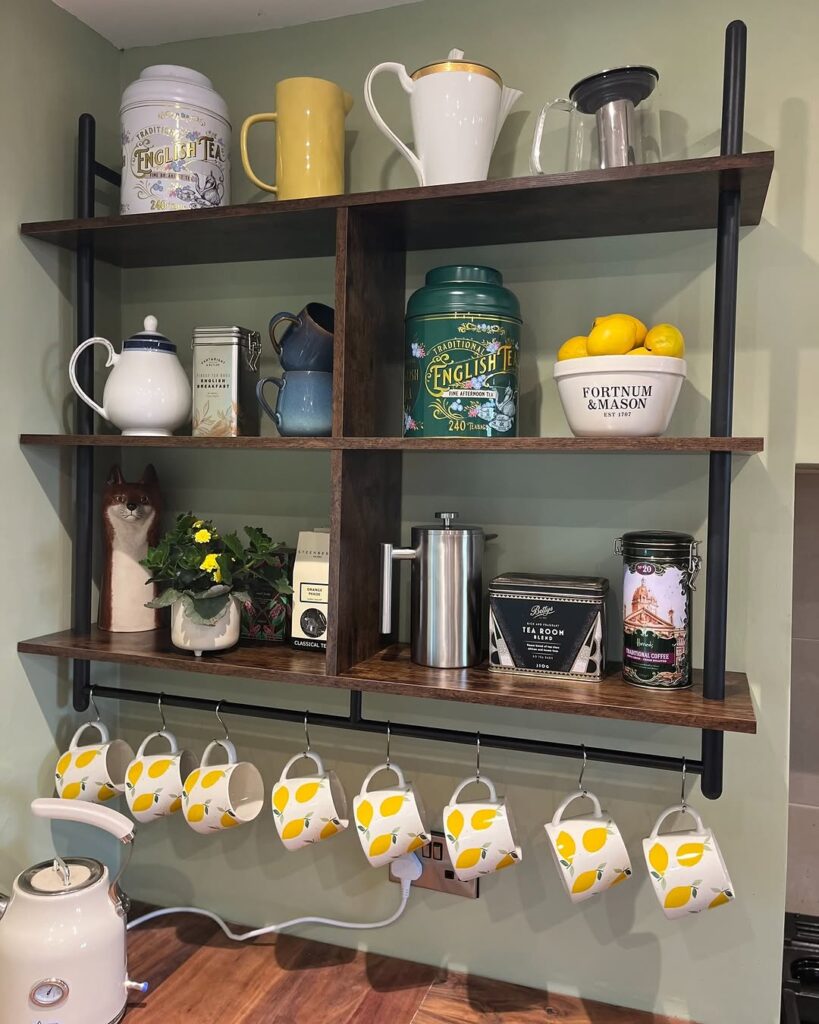
The Real Benefit
Beyond the practical organization, a tea station creates a moment of pause in your day. Walking to your station, choosing a tea, waiting for water to boil, steeping, adding honey—it’s a built-in mindfulness practice.
In a world that glorifies coffee for its speed and efficiency, tea offers something different. It requires patience and presence. Having a dedicated beautiful space for this ritual honors that difference and reminds you to slow down, even if just for five minutes.
Your tea station doesn’t need to be elaborate or expensive. It just needs to work for you and make your tea-drinking experience a little more intentional and a lot more enjoyable.
Now excuse me while I go make myself a cup of Earl Grey. My tea station is calling.