I’ve been slowly turning my living room into a boho paradise for the past year, and the number of times people have said “this feels so cozy and you” has been genuinely surprising. Apparently, maximalist comfort is my aesthetic and I’m not mad about it.
The thing about bohemian style is that it’s supposed to look effortless and collected over time, like you’ve traveled the world gathering treasures. The challenge is achieving that vibe without your space looking like a thrift store exploded. Let me show you how to walk that line.
What Actually Defines Boho Style
Bohemian living rooms are all about layered textures, global influences, natural materials, collected and eclectic pieces, plants everywhere, warm and earthy colors with pops of jewel tones, and a lived-in, comfortable feeling. It’s maximalist but intentional, colorful but not chaotic.
The key word is “collected.” Your boho living room should look like it evolved over time as you found pieces you loved, not like you bought a complete set from one store. That authentic, personal feeling is what makes boho work.
The Color Palette
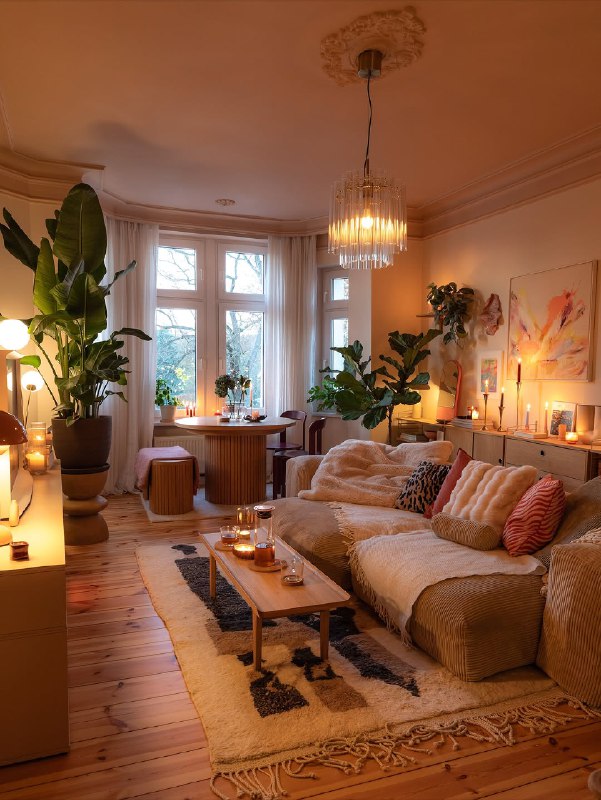
Start with warm, earthy bases like terracotta, rust, warm browns, cream, and camel. These ground the space and prevent it from feeling too chaotic. Layer in jewel tones for depth and richness—emerald green, sapphire blue, deep purple, burnt orange, and mustard yellow all work beautifully.
Add natural greens from plants because they’re essential to the aesthetic. Incorporate pops of color through pillows, throws, and art. The overall effect should feel warm, rich, and layered rather than matchy-matchy.
Don’t be afraid of pattern mixing. Boho thrives on combining florals, geometrics, ikat, suzani, and tribal prints. The trick is varying the scale of patterns and making sure colors repeat throughout so it feels cohesive.
Furniture Foundations
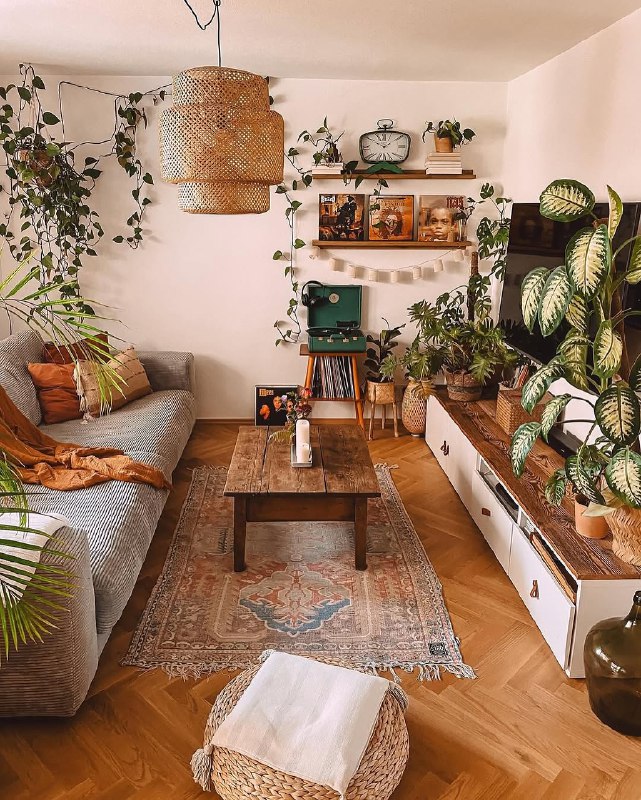
The sofa can be a solid neutral base that lets your textiles shine, or a vintage piece with character and wear. Low-slung sofas with lots of cushions create that relaxed boho vibe. I have a cream linen sofa that’s basically a neutral canvas for all my colorful pillows and throws.
Mix furniture styles and eras rather than buying a matching set. A vintage rattan chair next to a mid-century side table next to a Moroccan pouf creates visual interest. Wood, rattan, wicker, and natural materials work better than sleek modern pieces.
Low seating enhances the laid-back feeling. Floor cushions, poufs, and low chairs invite people to settle in and relax. I have a couple of Moroccan leather poufs that serve as extra seating or footrests and they’re perfect for the aesthetic.
Vintage or distressed pieces add character. Don’t shy away from furniture with patina or wear. That vintage coffee table with marks and scratches tells a story and fits the collected-over-time vibe.
The Layering Game
Boho is all about layers, and this is where the magic happens.
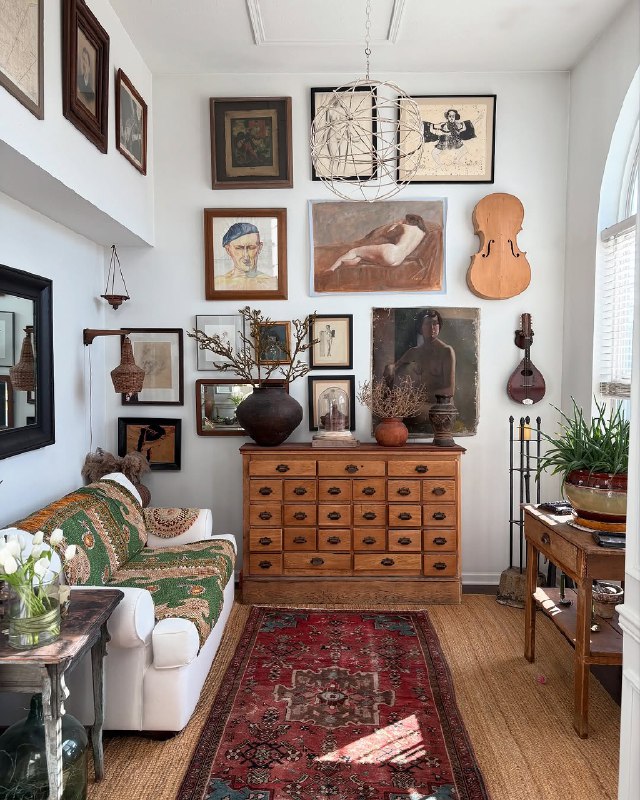
Rugs on rugs is the ultimate boho move. Layer a smaller vintage or patterned rug over a larger natural fiber rug like jute or sisal. The texture combination and unexpected pattern creates instant boho vibes. I have a Persian-style rug layered over a jute rug and it completely transformed my space.
Throw pillows everywhere in different sizes, patterns, and textures. Mix embroidered pillows with woven ones, velvet with cotton, tassels with fringe. Aim for at least 5-7 on your sofa. Yes, that many. Boho doesn’t do minimalism.
Throws and blankets draped over furniture add texture and comfort. Chunky knit throws, woven blankets, Mexican blankets, vintage quilts—layer them all. Drape them casually rather than folding them perfectly.
Textiles on walls bring in global influences. Hang tapestries, vintage rugs, macramé wall hangings, or textile art. This adds warmth and softness that paint alone can’t achieve.

Plants, Plants, and More Plants
A boho living room without plants isn’t really boho. They’re essential to the aesthetic and bring life and color to the space.
Go big with statement plants like a fiddle leaf fig, bird of paradise, or large monstera in a corner. These anchor the space and create a jungle vibe. Mix in medium plants on plant stands at varying heights. Add small plants on shelves, side tables, and any available surface.
Hang plants from the ceiling or wall-mounted planters to add vertical greenery. This saves surface space and creates visual interest at different heights. Use interesting planters like woven baskets, ceramic pots in earthy colors, or macramé plant hangers. The vessels matter as much as the plants.
I currently have seven plants in my living room and I’m eyeing spots for more. It sounds like a lot but once you start, you can’t stop.
Lighting That Sets the Mood
Boho lighting is warm, layered, and atmospheric.
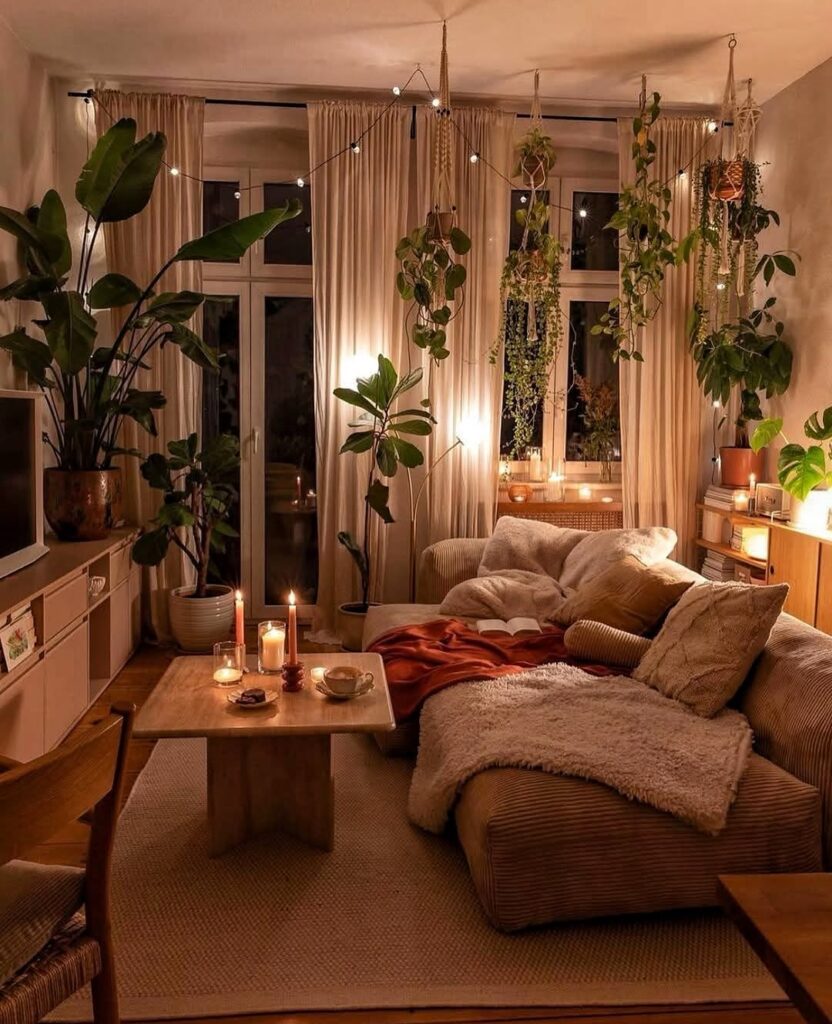
Skip harsh overhead lighting whenever possible. Use lamps, string lights, and candles instead for that soft, warm glow. I almost never turn on my overhead light.
Statement pendant lights in natural materials like rattan, woven fiber, or macramé become decor pieces themselves. Moroccan lanterns add beautiful patterned light and authentic global influence.
String lights or fairy lights aren’t just for dorm rooms. Draped along walls or around windows, they create ambient magic. Floor lamps with woven or beaded shades filter light beautifully.
Candles in various sizes and holders add warmth and ambiance. Use them on coffee tables, shelves, and side tables.
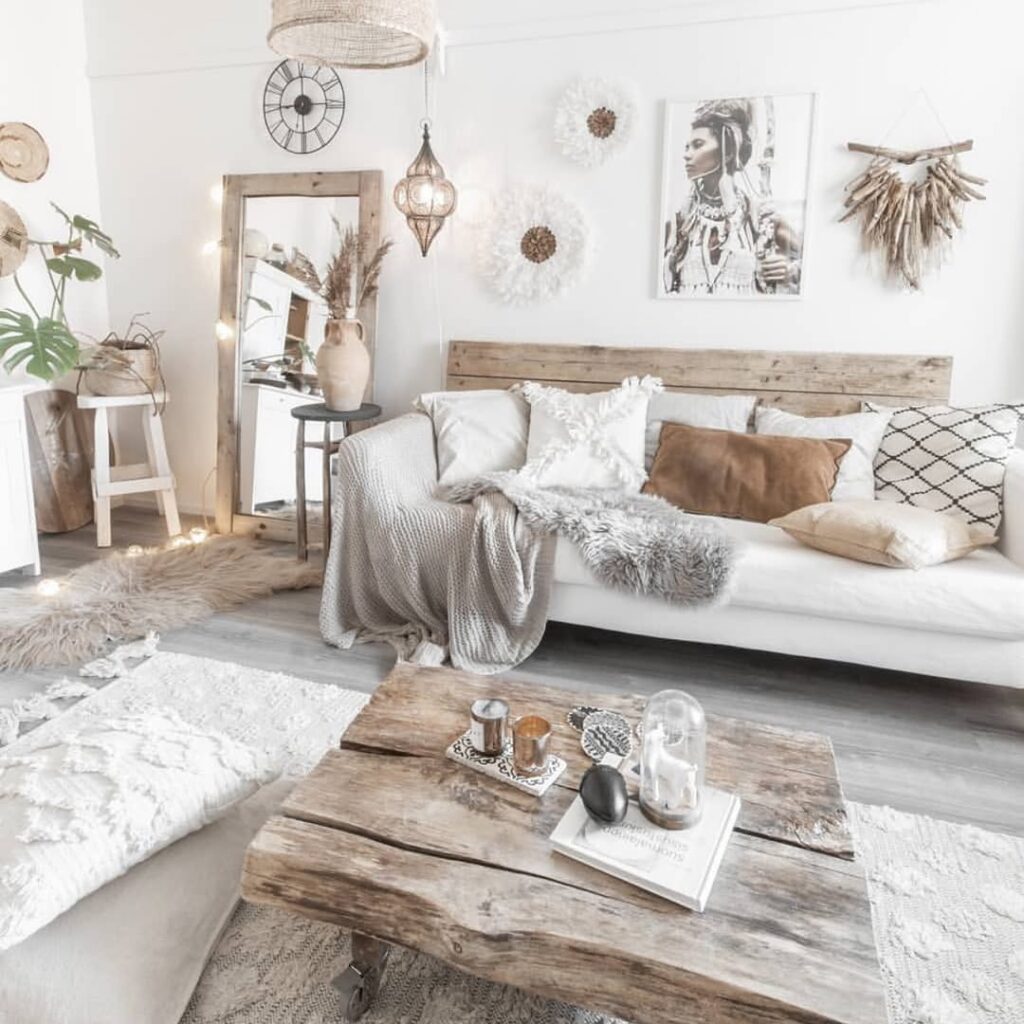
Wall Decor the Boho Way
Boho wall decor embraces abundance and personality.
Gallery walls with mixed frame styles, sizes, and art types create visual interest. Combine prints, photos, small mirrors, woven pieces, and maybe a hanging plant. Skip the perfect grid and go for organic arrangement.
Large-scale textile art like a vintage rug, tapestry, or macramé hanging becomes a focal point. These soften walls and add significant texture.
Mirrors with interesting frames in wood, rattan, or ornate vintage styles bounce light and add dimension. A large floor mirror leaning against a wall is very boho.
Floating shelves display plants, books, collected objects, and small art. Style them abundantly but not cluttered—there’s a difference.

The Details That Complete the Look
Books displayed everywhere on coffee tables, shelves, and stacked on the floor add color and personality. Show the spines or stack them horizontally with objects on top.
Global accents bring in that traveled aesthetic. Moroccan poufs, Indian block print pillows, Turkish kilim rugs, African mudcloth, Mexican blankets—mix global influences thoughtfully.
Natural elements like driftwood, shells, stones, or branches in vases connect to nature. A bowl of decorative balls, a collection of crystals, or a tray of found objects all work.
Vintage finds add character and history. Thrift store treasures, flea market finds, or inherited pieces make your space unique and tell stories.
Candles and incense holders contribute to the sensory experience. Boho isn’t just visual—it’s about creating atmosphere through scent and light too.
What Not to Do
Don’t buy everything at once. The collected look requires actually collecting over time. Don’t match everything perfectly. Coordinated sets kill the eclectic vibe. Don’t forget editing. Boho is abundant but not cluttered. If it feels chaotic rather than cozy, remove some things.
Don’t ignore functionality. Your living room still needs to be livable. Don’t go too dark. Boho should feel warm and inviting, not cave-like. Balance rich colors with plenty of natural light and light-colored elements.

Budget Boho
Creating a boho living room doesn’t require a huge budget.
Thrift stores and flea markets are goldmines for vintage furniture, unique decor, and global textiles. Some of my favorite pieces cost under $20. Layer affordable textiles from stores like HomeGoods, TJ Maxx, or even Target’s Opalhouse line. Mix in vintage or handmade pieces as you find them.
DIY macramé or woven pieces if you’re crafty. Materials are cheap and tutorials are free. Shop your house and repurpose things you already own. That vintage scarf could become a throw pillow. Those books could be decoratively displayed.
Start with plants because they’re affordable and make a huge impact. A $10 pothos in a thrift store basket adds instant boho vibes. Collect slowly and intentionally. One great piece per month builds your space over time without overwhelming your budget.
I’ve built my boho living room over a year and a half, spending maybe $50-100 per month on average. Some months nothing, some months a bigger splurge on a vintage rug. The gradual collection created the authentic layered look.
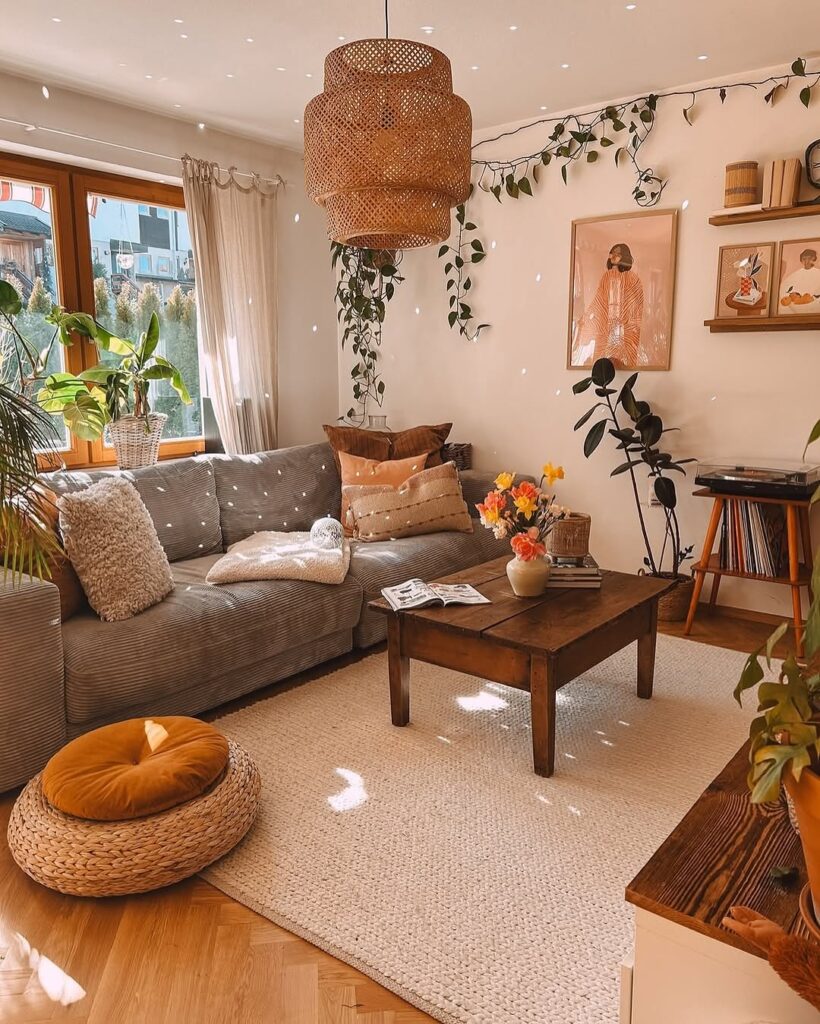
My Living Room Reality
Cream linen sofa piled with seven pillows in various patterns and textures. Layered rugs underneath. Vintage rattan chair in the corner with a chunky knit throw. Plants on every surface and a large fiddle leaf fig in the corner. Gallery wall with mixed frames and a small macramé hanging. String lights along one wall. Moroccan poufs serving as a coffee table with a tray on top. Books and candles scattered throughout.
Is it maximalist? Yes. Does it spark joy every time I walk in? Also yes. That’s the point.
Making It Work for You
Boho is incredibly personal. Your version should reflect your actual life, travels, and taste. Don’t feel pressured to include elements that don’t resonate with you.
Love bright colors? Lean into jewel tones. Prefer neutrals? Do a more muted earthy boho. Drawn to specific cultural influences? Feature those prominently. The beauty of bohemian style is that it’s inherently eclectic and personal.
Start with one area or element and build from there. Maybe you layer some rugs first. Then add plants. Then textiles. Let it evolve naturally rather than forcing a complete transformation overnight.
The goal is creating a space that feels warm, welcoming, and authentically you. Somewhere you actually want to spend time, not just something that looks good in photos. Boho living rooms should be lived in, comfortable, and full of things you love.
Welcome to the maximalist, plant-filled, pattern-mixing, cozy-as-hell world of bohemian living rooms. Your throw pillow collection is about to explode and your plant budget will skyrocket, but I promise it’s worth it.