My entryway used to be where shoes piled up, mail got dumped, and coats landed in a heap. It was the first thing I saw when I came home and the first thing guests saw when they arrived, and it was… not great.
Then I spent one weekend actually decorating it, and the difference was wild. Walking through the door to a pretty, organized space instead of chaos completely changed how I felt about coming home. Your entryway sets the tone for your entire home, so it’s worth getting right.
Let me show you how to turn your entry from dumping ground to something that actually makes you happy.

Why Your Entryway Matters
It’s the transition space between outside and home. How it feels affects your entire mood when you arrive. A cluttered, chaotic entry makes your whole house feel messy even if the rest is clean. A welcoming, organized entry makes everything feel more put together.
It’s also the first impression for guests. They form an opinion about your home within seconds of walking in, and your entryway is doing most of that work. You don’t need it to be fancy, but it should feel intentional.
Plus, a functional entryway makes daily life easier. When you have designated spots for keys, shoes, bags, and mail, you stop losing things and mornings become less chaotic.
Essential Entryway Elements
Every good entryway needs a few key components, though exactly what depends on your space.
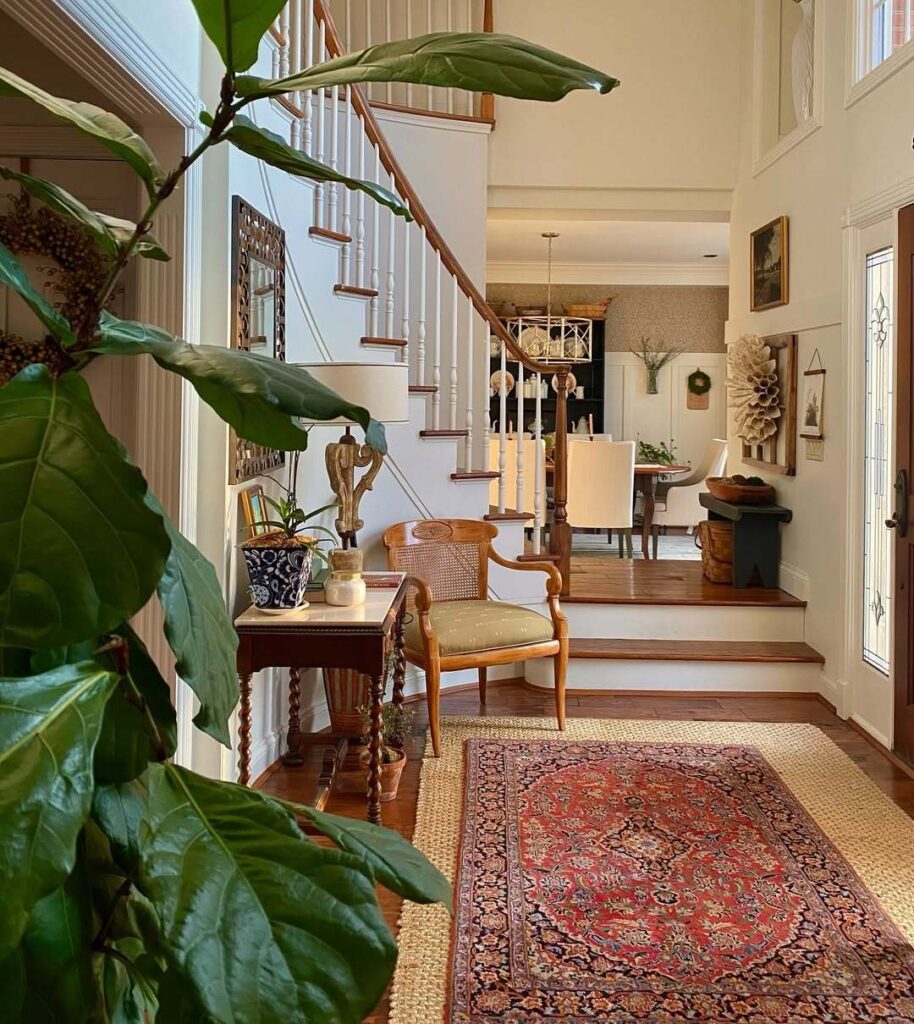
Somewhere to sit makes putting on shoes infinitely easier. A bench, stool, or even a small chair gives you a place to sit while dealing with footwear. It also creates a visual anchor for the space and can provide hidden storage underneath if you choose a bench with storage.
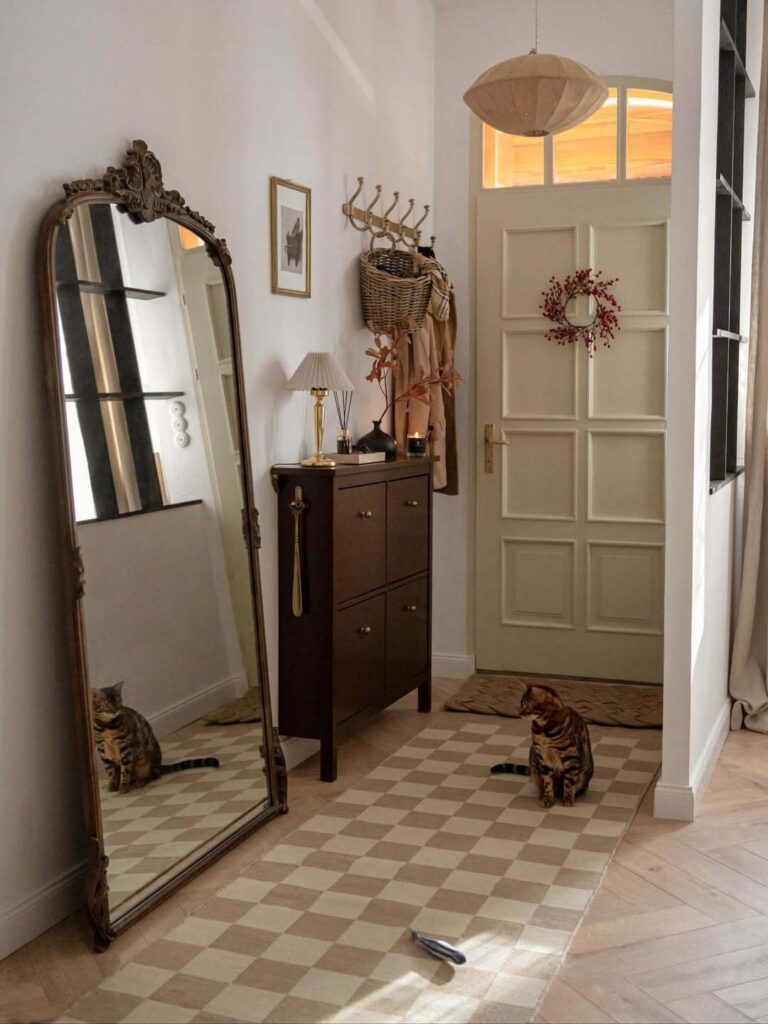
A place for shoes prevents the pile-up situation. A shoe rack, basket, tray, or even a designated mat where shoes live keeps them corralled. If your entry is tiny, a slim over-the-door shoe organizer or a vertical shoe cabinet works.
Hooks for coats and bags are essential unless you have a coat closet right there. Wall-mounted hooks, a standing coat rack, or a wall-mounted rack all work. Multiple hooks at different heights accommodate different people and items.
A surface for keys and mail gives these daily items a home. A console table is ideal, but a floating shelf, small side table, or wall-mounted shelf all work. Include a small dish or tray for keys and a basket or slot for mail.
A mirror is both functional and makes spaces feel larger. Check yourself before leaving, bounce light around, and create the illusion of more space. Win-win-win.
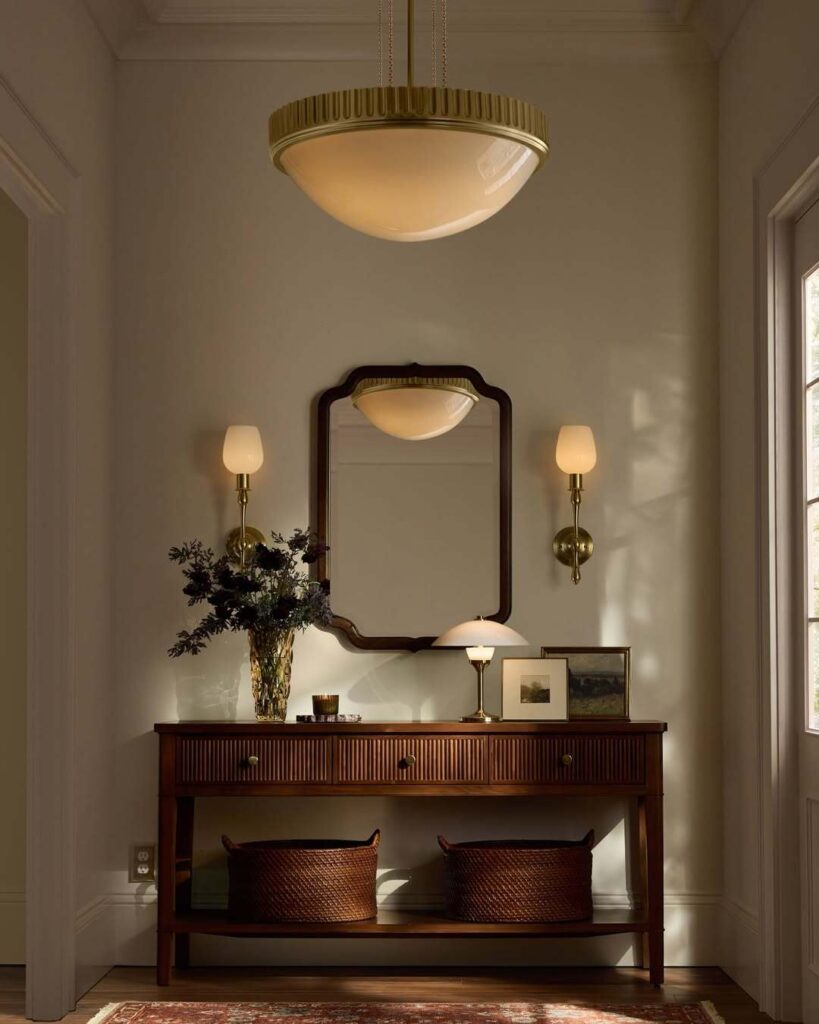
Lighting shouldn’t be overlooked. A dark entryway feels uninviting. A table lamp, wall sconce, or even just making sure your overhead light is warm and bright makes a huge difference.

Small Entryway Solutions
If your entry is tiny or basically nonexistent, you can still make it work.
Go vertical with wall-mounted everything. Floating shelves for keys and decor, hooks for coats, a tall narrow shoe cabinet, and a vertical mirror maximize your limited wall space without taking floor space.
Use multi-functional furniture like a storage bench that provides seating, shoe storage, and a surface for bags all in one piece. A small console table with baskets underneath stores shoes while providing a surface on top.
Create a mini entry zone even in an open space. Use a runner rug to define the entry area, add a wall-mounted hook strip, and call it your entryway. The rug creates a visual boundary that says “this is the entry” even without walls.
Slim console tables designed for small spaces are usually 10-12 inches deep, perfect for narrow hallways or small apartments. They give you surface space without blocking the flow.
My apartment entry is maybe three feet wide, but I have a narrow console table, two hooks above it, a mirror, and a basket underneath for shoes. It works perfectly because everything is scaled appropriately and serves multiple purposes.
Styling Your Console Table or Shelf
This is where you get to make it pretty while keeping it functional.
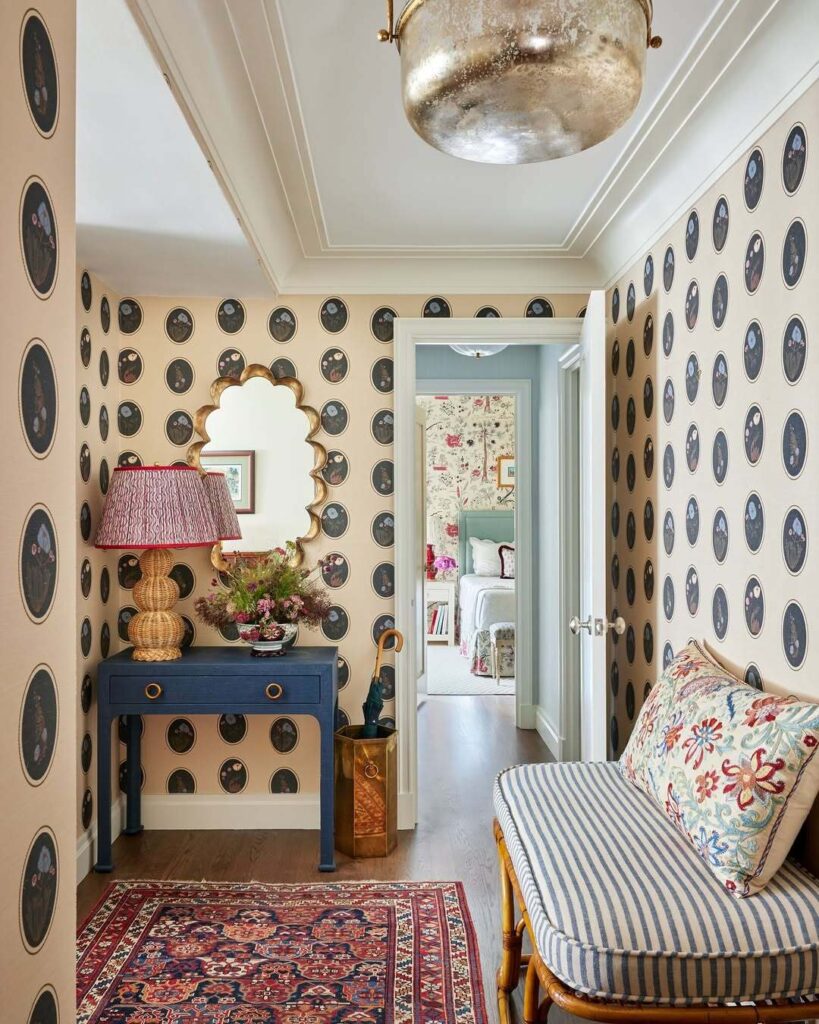
The tray method corrals daily essentials. Put a decorative tray on your console and use it to hold keys, sunglasses, and small items you grab on your way out. The tray keeps things contained and looks intentional rather than messy.
Add height with a lamp or tall decor creates visual interest and provides needed lighting. A table lamp, tall vase with branches, or a tall candle holder draws the eye up and makes the space feel more complete.
Include something living like a small plant or fresh flowers. Even a small succulent adds life to the space. If you can’t keep plants alive, quality faux plants work fine.
Personal touches make it yours. A framed photo, a small piece of art propped on the table, or a decorative object you love. This is your home’s first impression—let it reflect your personality.
Keep it seasonal by swapping out a few small elements. A small pumpkin in fall, evergreen branches in winter, fresh flowers in spring. You don’t need to redecorate the whole space, just a few touches keep it feeling fresh.
I keep mine pretty simple: a wooden tray with a small dish for keys, a table lamp, a small plant, and usually one seasonal element. It’s functional but still looks styled.
Wall Decor Ideas
Blank walls in an entry are a missed opportunity.
A large mirror is the most functional option. It makes the space feel bigger, bounces light around, and lets you check yourself before leaving. A decorative frame makes it a statement piece.
Gallery wall creates visual interest if you have enough wall space. Keep it cohesive with matching frames or a consistent color palette. Mix art, photos, and even a small mirror for variety.
Single statement piece works better in very small entries. One large piece of art or a decorative wall hanging becomes a focal point without overwhelming the space.
Hooks that double as decor come in beautiful designs. Brass hooks, ceramic knobs, or decorative iron hooks are functional and pretty. Arrange them in an interesting pattern rather than a straight line for more visual appeal.
Floating shelves provide display space for small plants, books, or decorative objects while taking up zero floor space.
Functional Storage Ideas
Making your entryway actually work requires smart storage.
Baskets hide all kinds of things. Under a console for shoes, on a shelf for hats and gloves, hanging on hooks for scarves. They corral clutter while looking intentional. I have a large basket under my console that holds all our shoes and it’s a game changer.
Wall-mounted organizers with slots for mail, hooks for keys, and small shelves keep daily items accessible but organized. These are especially good for really small spaces where you need vertical solutions.
Bench with storage provides seating and hides shoes, bags, or seasonal items inside. Even a small ottoman with storage works if you have minimal space.
Coat rack or standing hooks work if you don’t have wall space for mounted hooks or don’t want to put holes in walls. Modern coat racks can be really attractive and provide tons of hanging space.
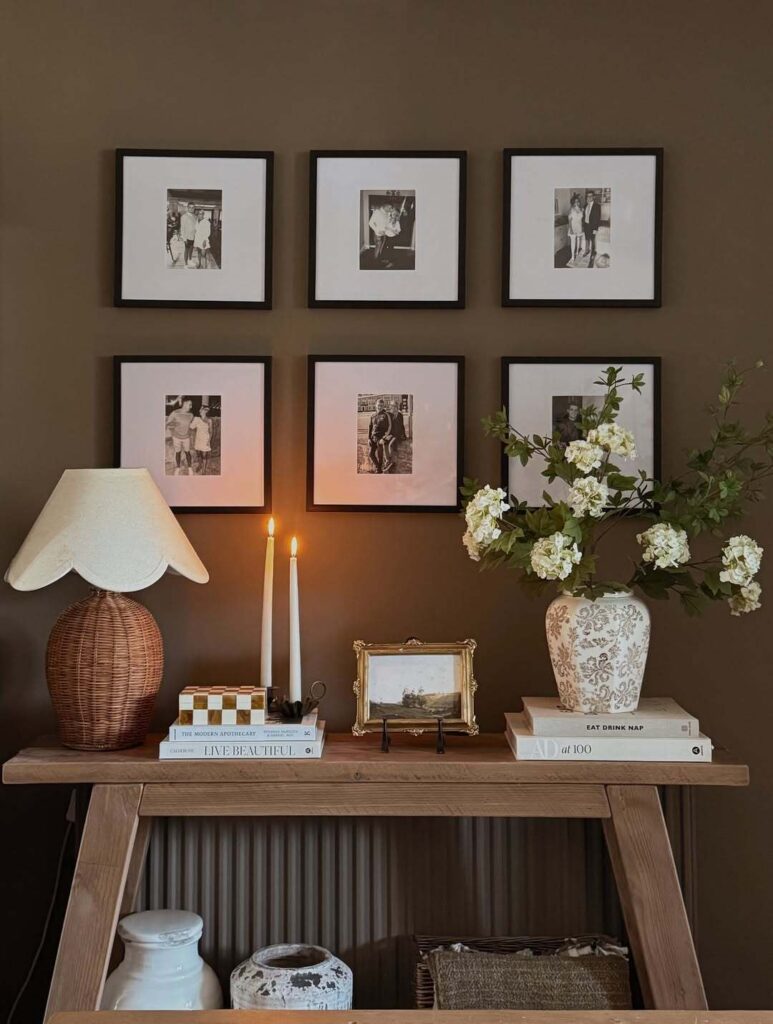
Entryway Styles
Modern minimal keeps it simple with clean lines, neutral colors, and just the essentials. A slim console, simple mirror, one or two functional items, and maybe a plant. Nothing extra, everything intentional.
Cozy traditional embraces warmth with wood furniture, soft lighting, comfortable seating, and classic decor elements. Think wood bench, brass hooks, warm-toned art, and a traditional mirror.
Bohemian eclectic mixes patterns, textures, and colors. A mix of rugs, colorful baskets, plants, macrame wall hangings, and collected objects from travels. The vibe is welcoming and lived-in.
Farmhouse casual features rustic wood elements, galvanized metal, neutral colors with natural textures, and functional pieces that look good. Shiplap walls if you have them, a wooden bench, wire baskets, and simple decor.
Glam and elegant goes for high-shine and sophistication with mirrors, metallics, luxe textures like velvet or marble, and polished finishes. Think mirrored console, gold accents, crystal lamp, and elegant art.
Pick a style that matches the rest of your home so the entry feels like a natural extension rather than disconnected.

What Not to Do
Don’t let mail pile up indefinitely. Even if you have a designated mail spot, it needs to be sorted regularly or it becomes clutter. Don’t overcrowd the space with too much furniture or decor. An overstuffed entryway feels chaotic rather than welcoming.
Don’t ignore lighting. A dark entry feels depressing. Don’t skip the doormat, both outside and inside. They’re functional and help define the space. Don’t hang coats on the back of the door long-term. It’s fine as a temporary spot but shouldn’t be your only solution.
My Entryway Evolution
I started with just a small shelf and hooks. Then I added a basket for shoes. Then found a console table that fit perfectly. Added a mirror above it. Got a lamp. Added a plant. It happened gradually as I figured out what I actually needed versus what looked good in photos.
The biggest game-changer was the basket for shoes. That alone reduced visual clutter by about 80%. Everything else just made it prettier, but the basket made it actually functional.
Now my tiny entryway has a narrow white console table, a round mirror above it, two brass hooks, a basket underneath for shoes, a small lamp, and a plant. It’s simple but it works perfectly for our space and makes me happy every time I walk in.
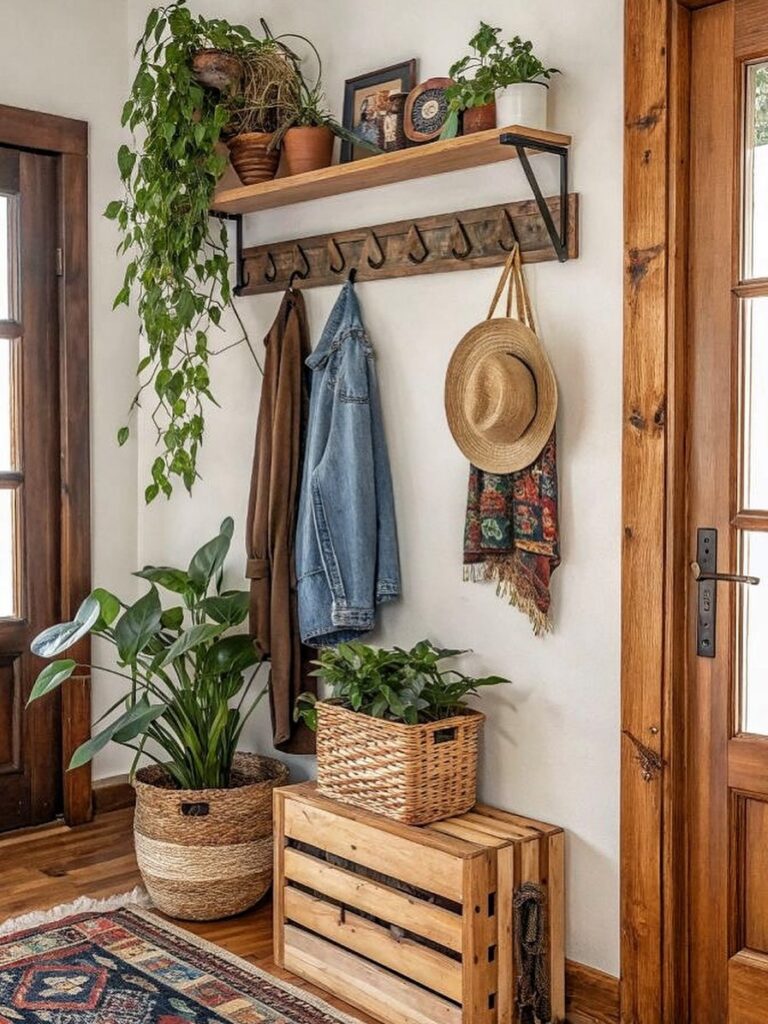
Starting Your Entryway
If you’re starting from scratch, begin with function. What do you actually need to do in your entryway? Drop keys, take off shoes, hang coats? Start with solutions for those needs, then add the pretty stuff.
You don’t need to do everything at once. Add one element at a time and see how it works before adding more. Shop your house first—that side table from your bedroom might work perfectly as a console. That mirror in the closet could go above it.
Your entryway doesn’t need to be elaborate or expensive. It just needs to work for your life and feel welcoming when you walk through the door. That’s honestly all that matters.
Make your entry a space you’re happy to see at the end of a long day. It’s worth the effort.